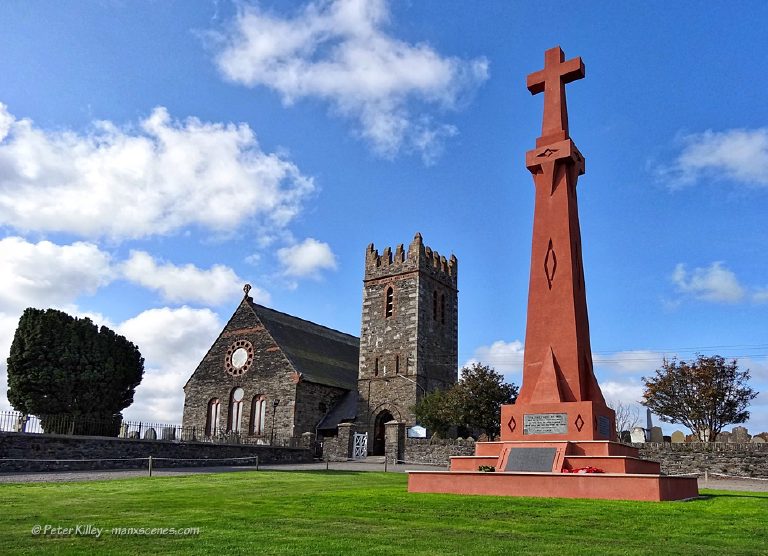
Andreas War Memorial Restoration
Andreas, Isle of Man
2014
Stone restoration is the one part of our work where the object is to remove as little as possible. On a memorial or a public building the stone is usually the only original material left, so the aim is to keep it — repair what has decayed, match what has gone, and leave everything that is still sound alone.
Rather than cutting out whole stones, decayed areas are cut back to something solid and built up in a mineral stone-repair mortar — at Douglas Town Hall that was KEIM Restauro — then dressed back to the profile and colour-matched into the surrounding masonry with Restauro Lasur. Done properly the repair disappears, and the wall keeps far more of its original fabric than a replacement would leave it.
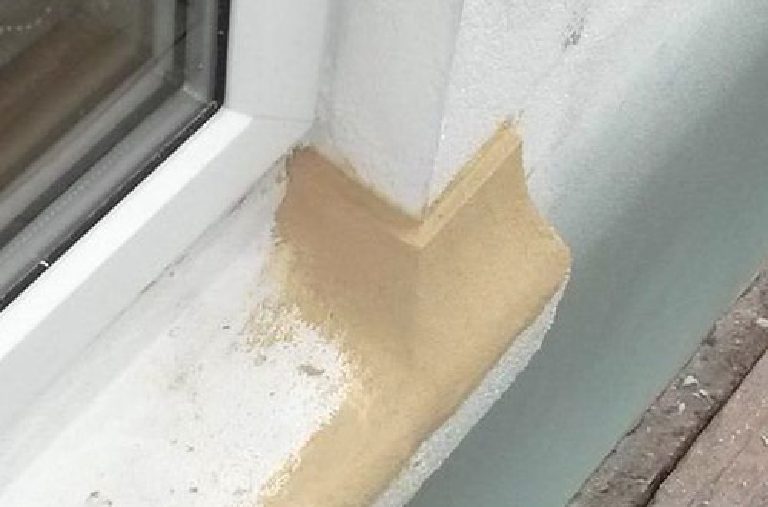
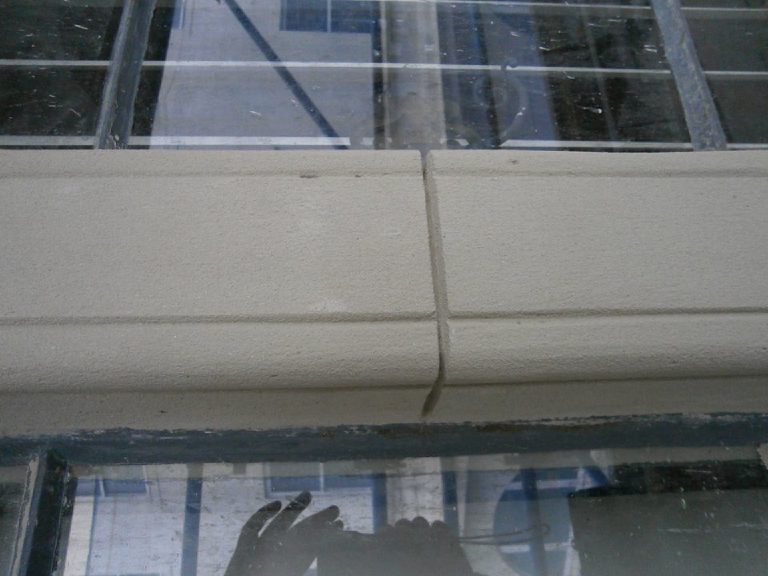
The same approach rebuilds weathered sandstone window sills: a specialist mineral repair material, worked to match the original stone, protecting the edge that takes the weather.
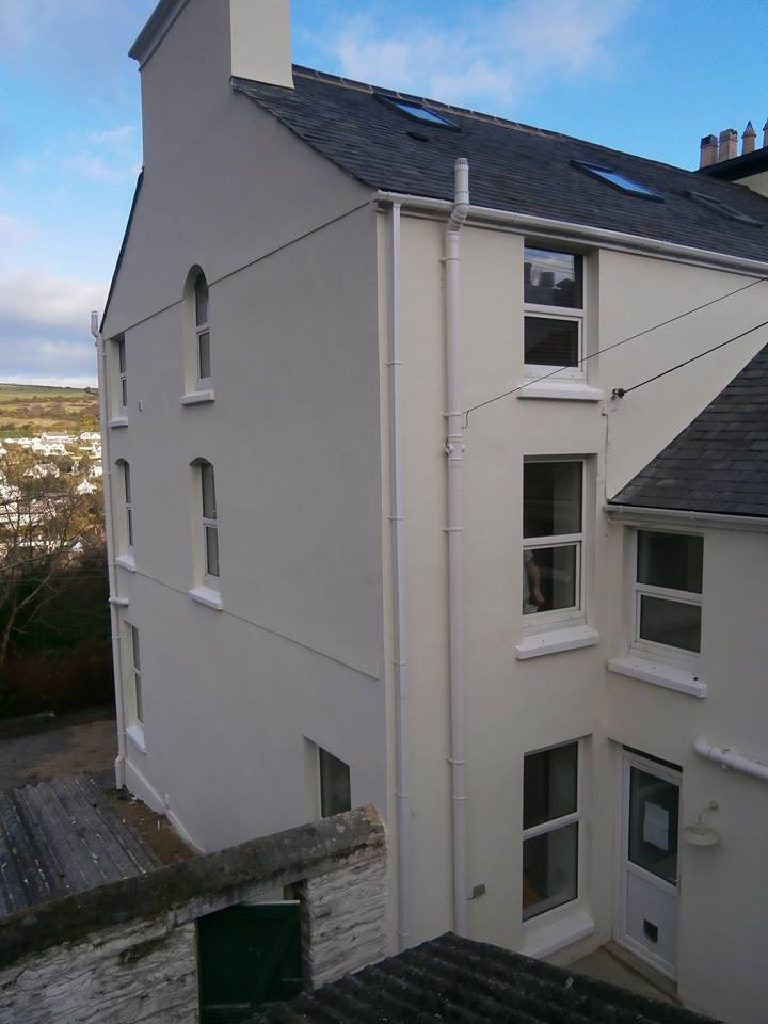
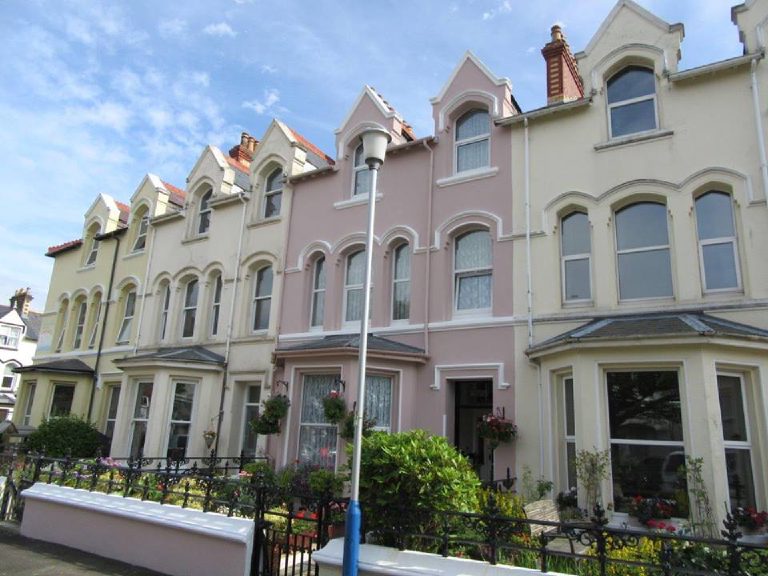
The job we are most often called to undo is an acrylic coating. Acrylic forms a film. On a modern wall that is fine. On an older building it is not, because moisture moves through the structure and evaporates off the face — seal the face with a plastic film and the water has nowhere to go. It sits in the wall until it pushes the coating back off, taking the surface with it. That is exactly what we found at a Victorian house on Grosvenor Road, where the whole of a sprayed acrylic coating had to come off before anything else could be done.
Where an old building does need coating, it wants a breathable mineral system. Where it needs render, it wants lime. The material has to let the wall work.
The Andreas War Memorial runs to over thirty feet and took several stages to complete: the stonework restored, and the whole finished in a weathered terracotta render chosen to sit in keeping with the church behind it. Details such as the decorative crosses were reworked and recessed back in rather than being allowed to disappear under the new work.
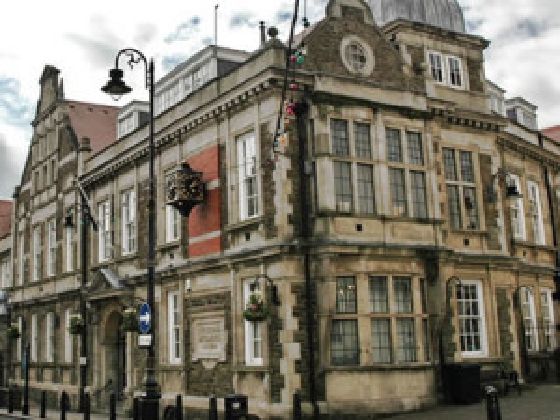
How far the decay goes, and what has been put on the wall before.
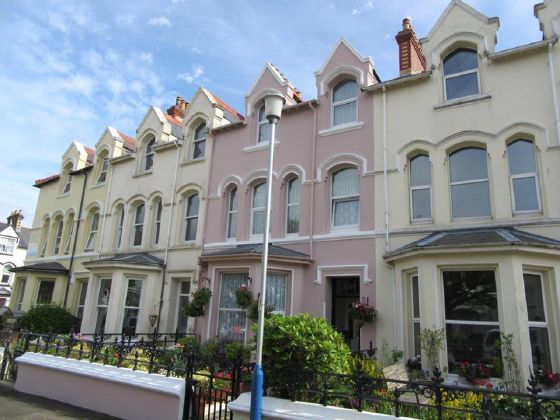
Stripping failed acrylic and paint films off older buildings.
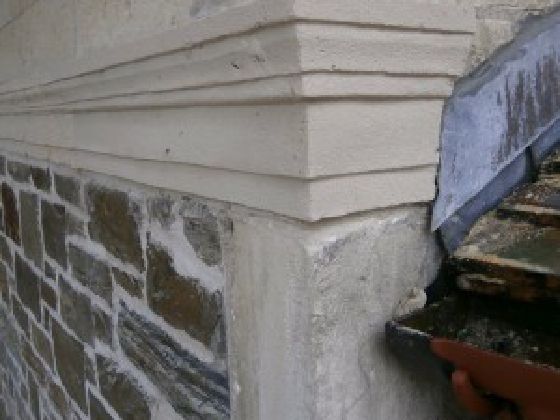
Decayed stone cut back and rebuilt in place rather than replaced.
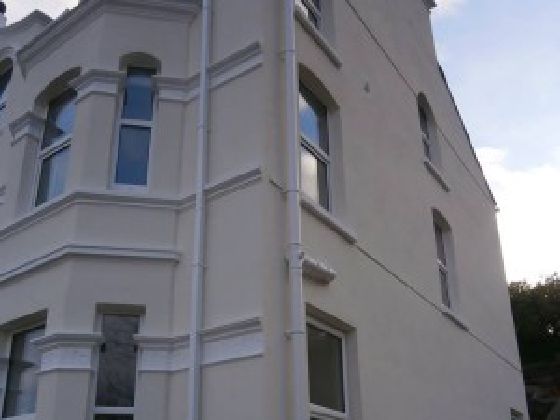
Repairs dressed and toned into the surrounding masonry.
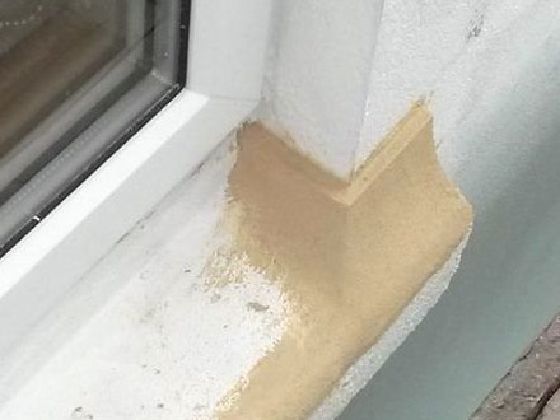
Weathered sandstone sills rebuilt to match the original.
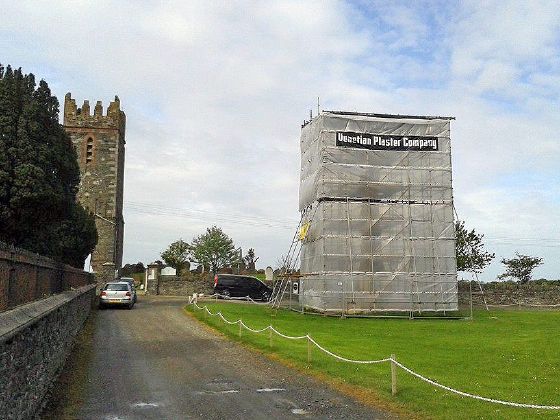
Including work carried out in stages on tall structures from scaffold.
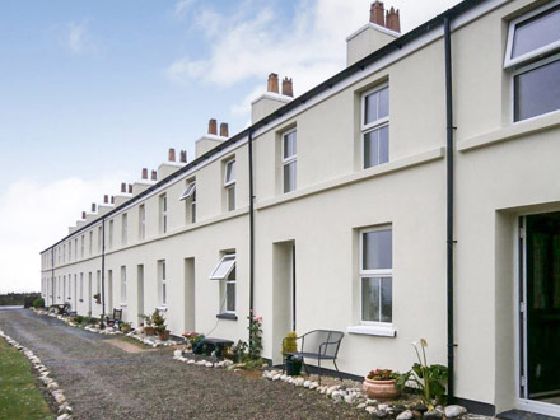
Mineral coatings and lime render where an older wall needs to be left able to breathe.
How far the decay goes, how much of the stone is still sound, and — often the real question — what has been put on the wall in the past that should not have been.
Where there is a failed acrylic or paint film it all has to come off before anything else. On Grosvenor Road that was done with a mineral paint stripper and a high-pressure steam cleaner, which lifts the film without cutting into the stone behind it.
Decayed areas are cut back until what is left is sound. Whole stones are not taken out if a repair will do — the object is to keep as much original fabric as possible.
The cut-back area is rebuilt in a stone-repair mortar and dressed back to the original profile. At Douglas Town Hall that was KEIM Restauro.
The repair is matched to the surrounding masonry — Restauro Lasur at the Town Hall. Done properly you should not be able to see where the work stops.
Get in touch to discuss your project — from a single feature wall to a complete renovation, we'd love to help.