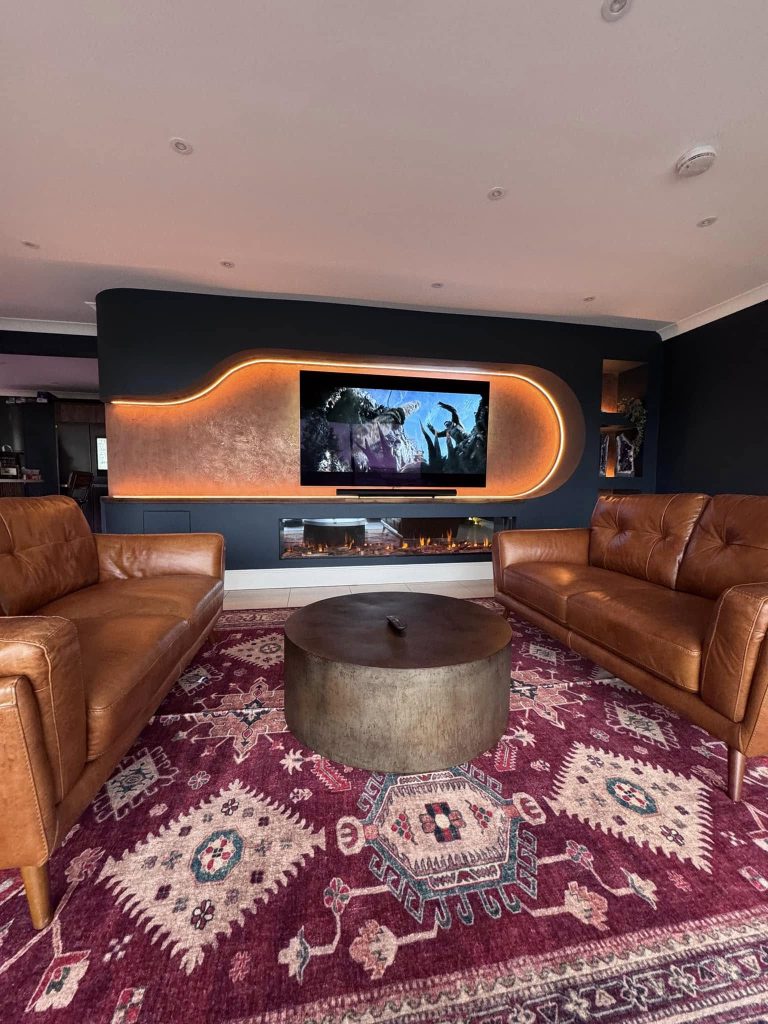
Media Wall in Venetian Plaster
Isle of Man
2025
Venetian Plaster is a general term for lime-based plaster finishes that have been used for centuries to create beautiful, durable wall surfaces. Originating in Venice, these techniques create depth, luminosity, and a sense of luxury that cannot be achieved with paint.
Our Venetian Plaster services encompass a range of traditional and contemporary techniques, from the highly polished Lucidato to the textured Intona, and everything in between. Each finish is applied by hand using traditional tools and methods, creating unique, artisanal surfaces.
Venetian plaster finishes are breathable, durable, and environmentally friendly, making them ideal for both historic restoration and modern architectural projects.
Each of these has its own page and its own gallery of work:
Alongside Marmorino, Lucidato and Intona, these four have their own character and their own uses.
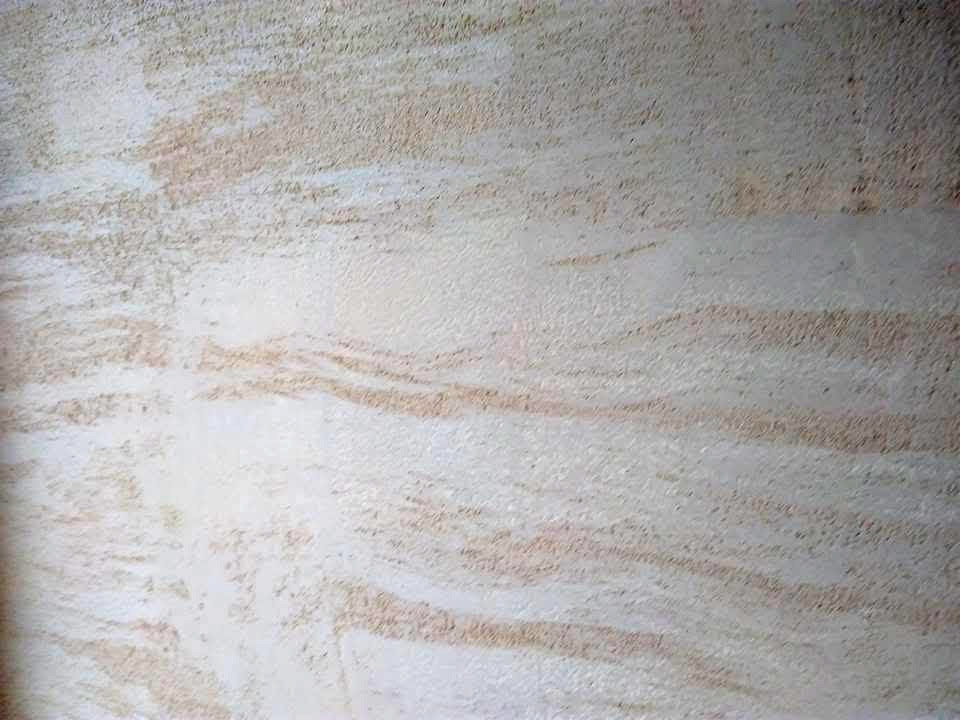
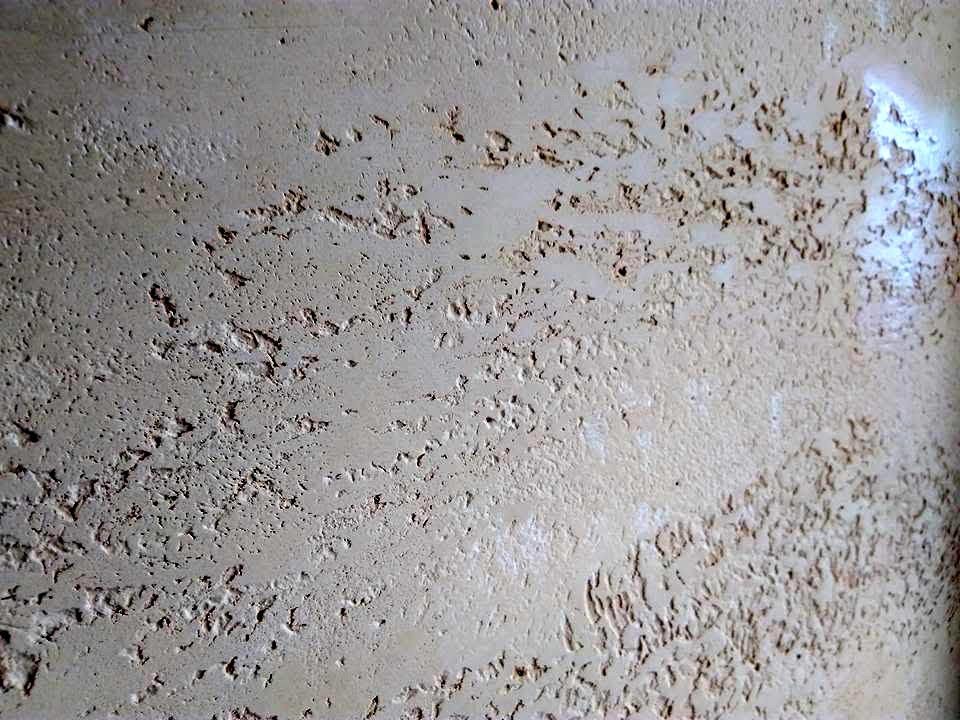
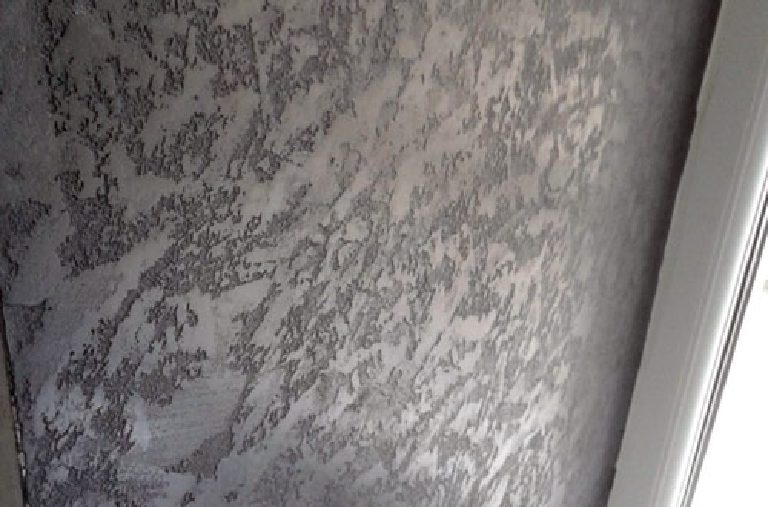
Travertino Venetian plaster is created to have the look and feel of natural travertine stone which is a form of limestone; a light coloured rock which can occur in white, tan, cream-coloured, and even rusty colours and has a fibrous or concentric appearance.
Travertine has a subtle stone-like effect with a gentle pitted texture of varying degrees depending on grain size and client requirements. The surface has a low sheen, and although applied in just one colour appears to have two or three distinctly separate tones running through the surface.
This finish can work well in colours across the spectrum as it is possible to achieve the subtle tonal contrasts in both light and dark colours. The unique characteristics of this textured plaster finish give it an inherent warmth and appeal.
It is suitable for interior application and exterior, when used over the correct substrate. It is suitable for luxury commercial and residential applications and public areas such as large lobbies, libraries or office buildings.
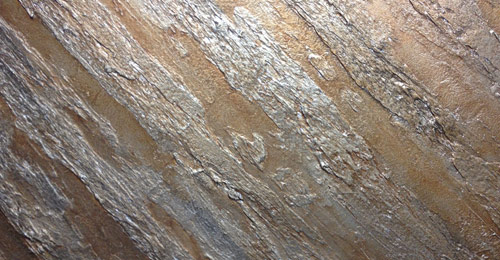
Rilievo is a specialised fibrous plaster used for creating thick, textured surfaces or irregular textured undercoats due to the inclusion of special horse-hair like threads.
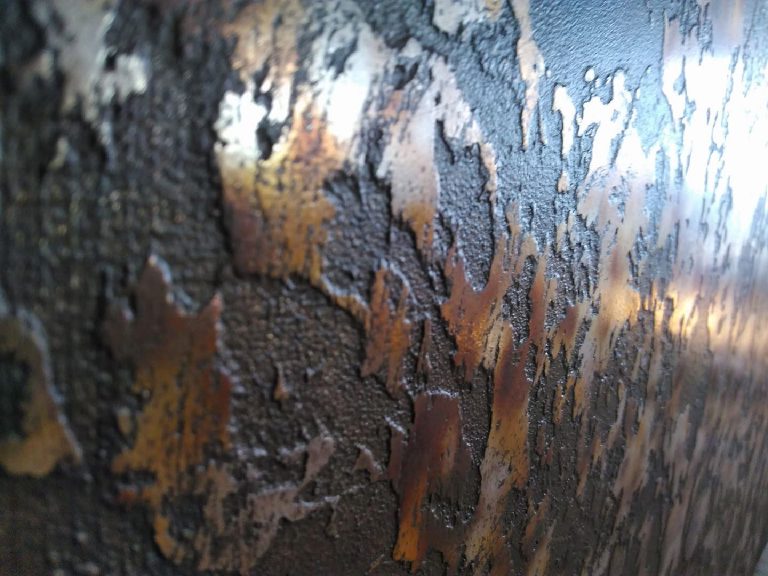
It is suitable for an antiqued effect for finishing and colouring with decorative products like Cadoro — Iridescent or Metallic Wax. This unique finish creates depth and texture that can be enhanced with various decorative treatments.
The fibrous nature of Rilievo makes it ideal for creating rustic, aged appearances and provides an excellent base for further decorative finishes.
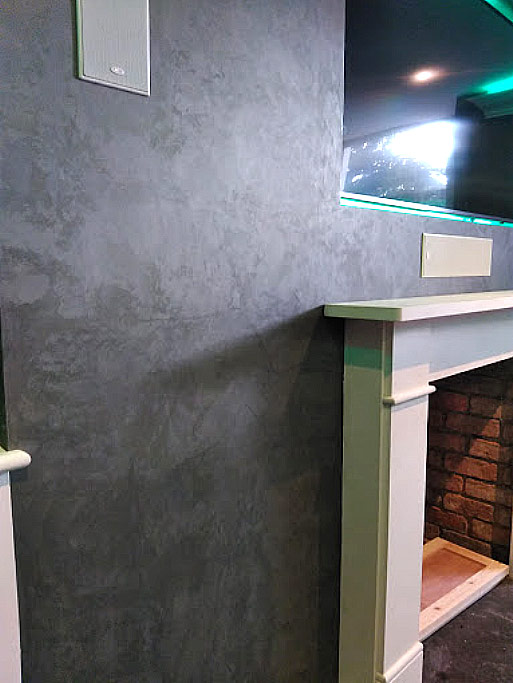
Cadoro is a decorative plaster with a special iridescent effect, soft to the touch and with a silky appearance, perfect for creating classic and modern atmospheres. It enables the realisation of various decorative effects according to fancy and the application technique used, with degrees of iridescence depending on the amount of light reflected.
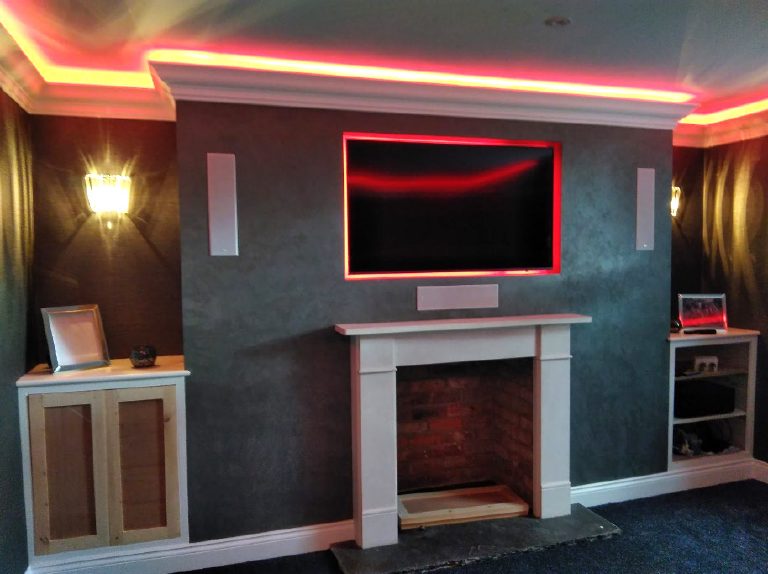
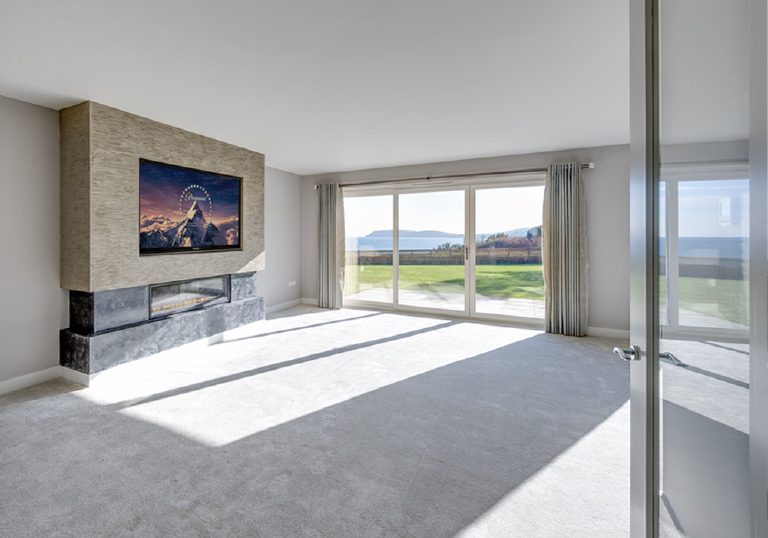
It goes on by trowel in a couple of coats, like the other plasters here. On a home cinema in the Island we took it around the fire breast for a shimmering, velvety wall — and with the mood lighting the owners had installed, the colour of the whole wall changes with whatever the room is set to.
It has a second use as well: laid over Venetian plaster or over the fibrous texture of Rilievo, it creates stunning metallic and iridescent effects on top of another finish.
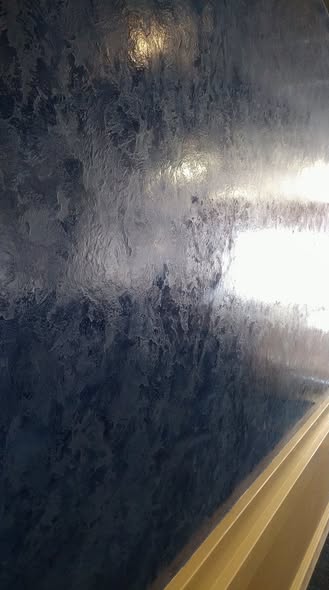
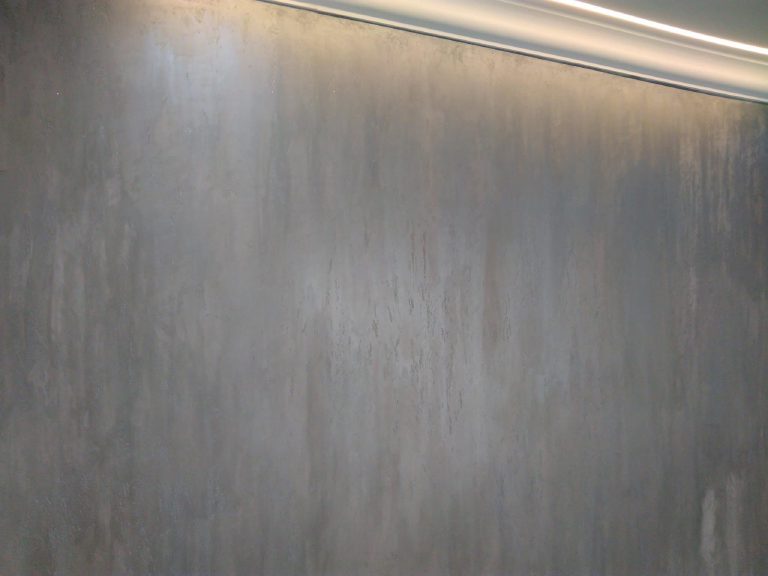
Polished Plaster is the trade name for a plaster burnished up to a sheen rather than left matt. The polishing is the whole point: multiple thin coats, each one worked and compressed with the trowel, until the surface closes up and starts to reflect. What you get is depth — the light goes into it rather than bouncing straight off, and the wall changes as you move past it or as the day turns.
It suits the surfaces a room is built around. A reception panel, a media wall, the front of a bar, a fire breast: places where one surface is doing the work and can afford to be looked at.
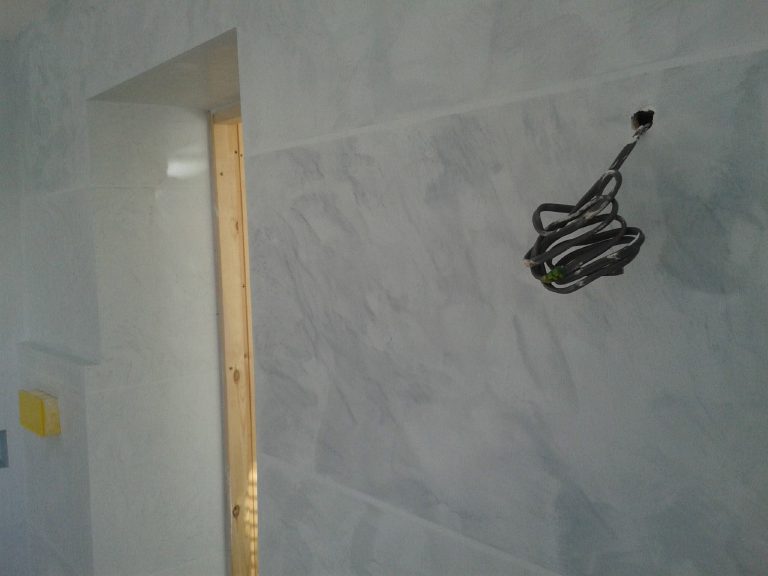
It is a technique rather than a separate material, which is why it turns up on the pages above as much as on its own: Lucidato is the high-gloss end of it, and Marmorino can be taken anywhere from a flat matt to a burnished polish.
A plaster finish does not have to stop at the plaster. These are the treatments we work over the top, each of which changes how a wall behaves as much as how it looks.
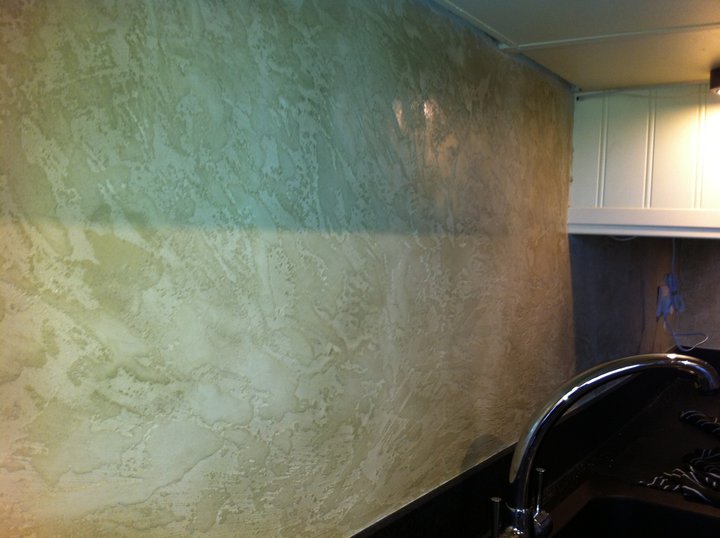
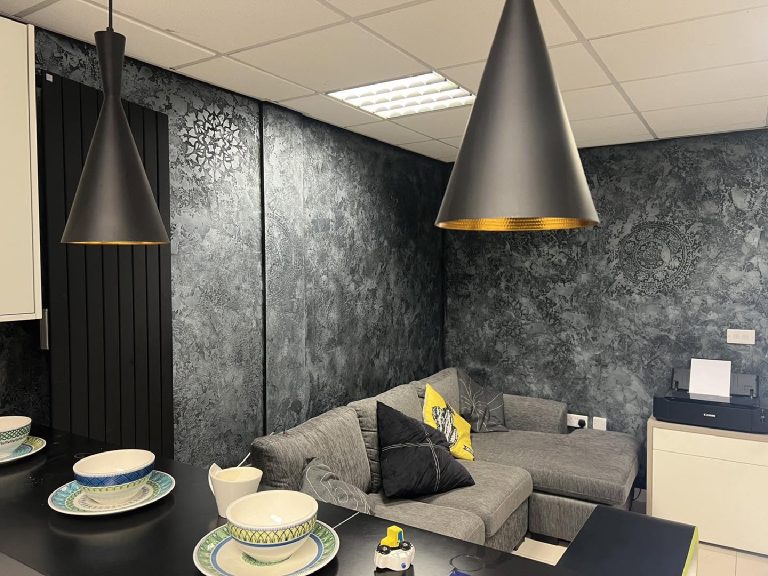
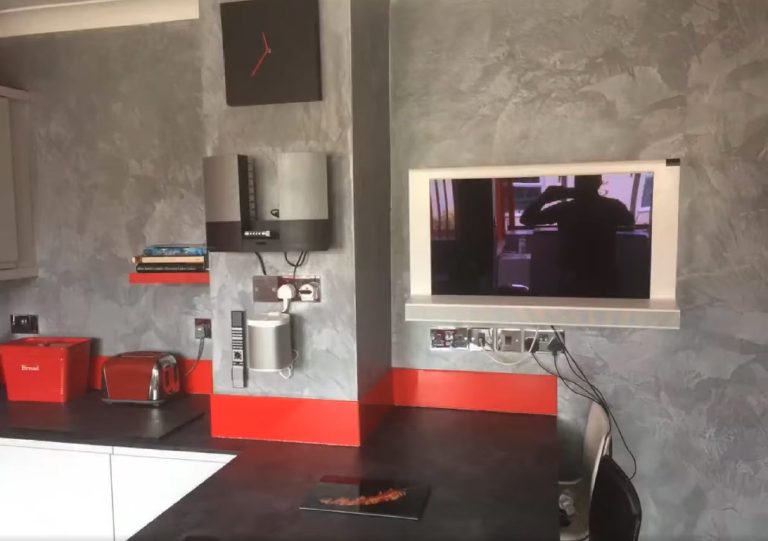
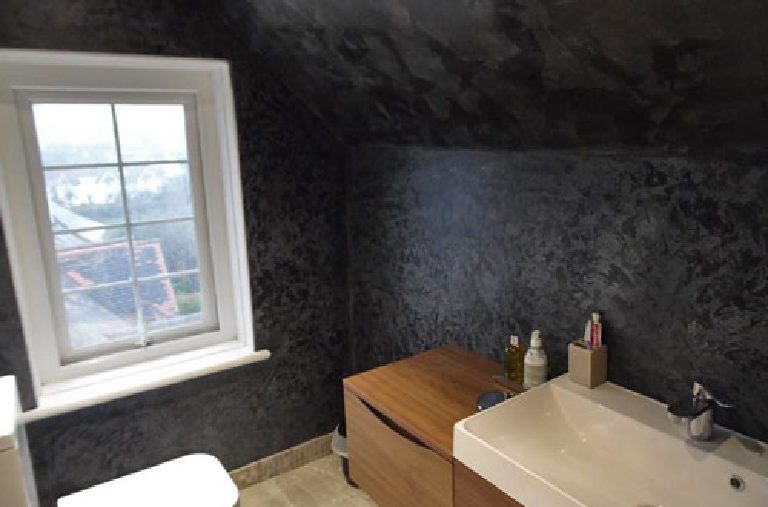
Textured finishes can be further enhanced by the application of a Colourwash. These can achieve an antiqued effect for both interiors and exteriors, characterised by soft and muted hues.
A transparent glaze combined with pure pigment, metallic or pearlescent powder is applied to the plaster, enriching the surface to create a resistant finish, with excellent breathability and good water repellency.
The Colourwashed finish, with its rich tones is ideal for large walls, feature areas and dramatic display backdrops, especially when combined with creative or dramatic lighting.
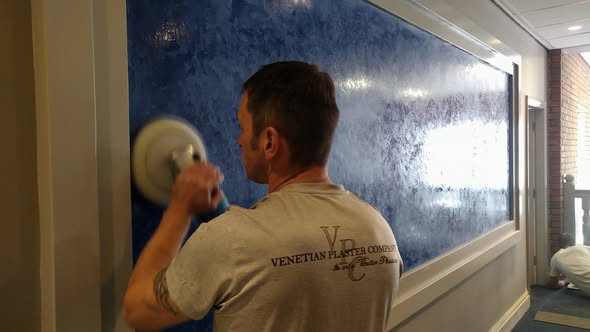
A wax coat adds durability to your finish — highly desirable in kitchen, bathroom or hallway. Sealing the finished plaster not only protects it from grease and dirt and makes it water repellent, but also gives a subtle glossy finish.
We use a cold wax that we trowel apply, leave to dry for a couple of hours, then buff with a polishing machine. Our all natural bees wax gives a lovely shine and smell, and our waterproof wax does not change the colour of the plaster finish and is quickly absorbed into the surface without leaving any traces, leaving a high to medium sheen.
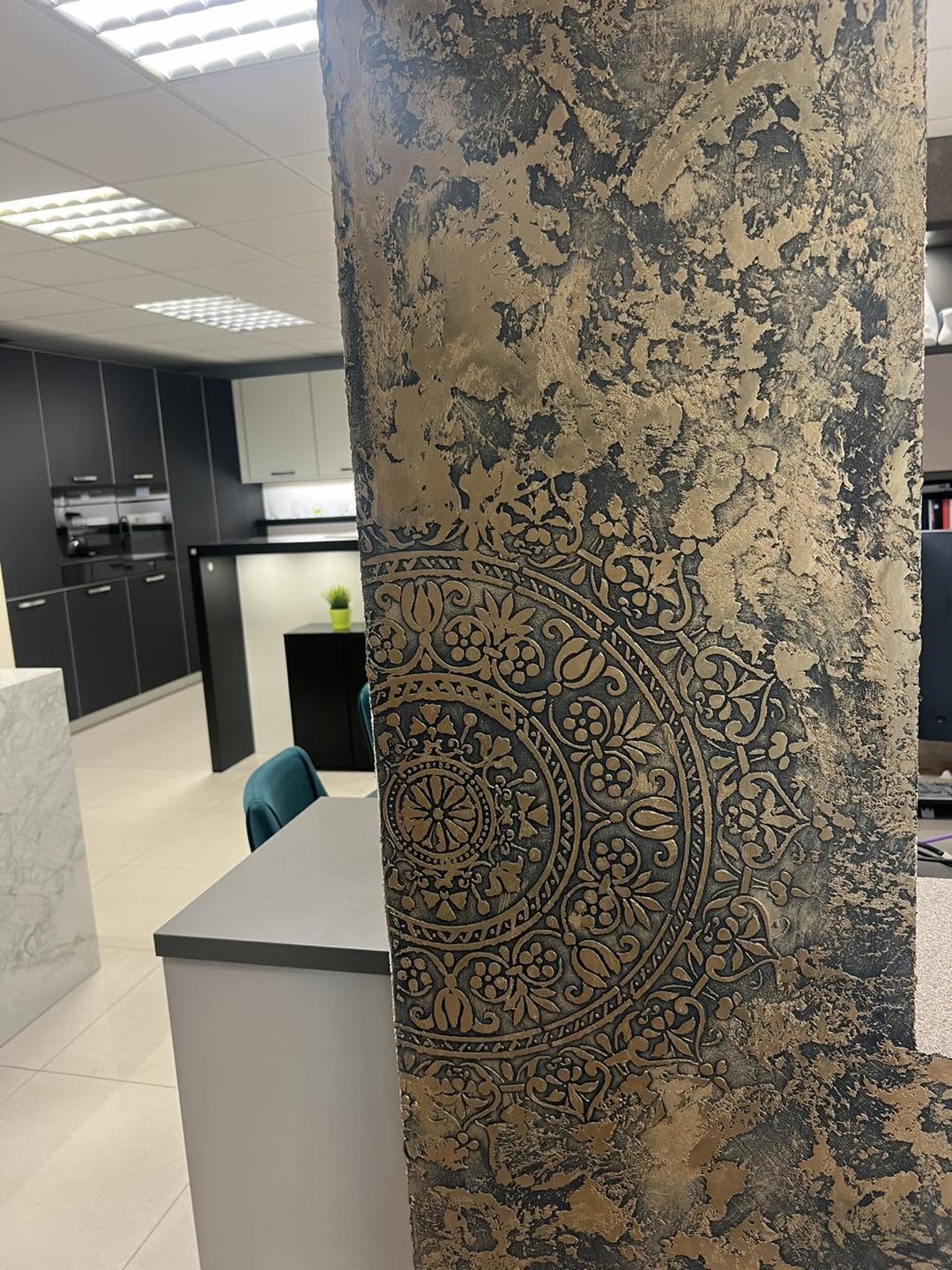
Metallic wax creates depth and shine to the finish. Effects range from a slightly pearlescent look, to an elegant and soft metallic sheen to a high glossy “wow!”.
The wax increases the surface's waterproofness and also protects it. Available in a range of Gold, Silver, Bronze, White and Copper to suit your projects' needs.
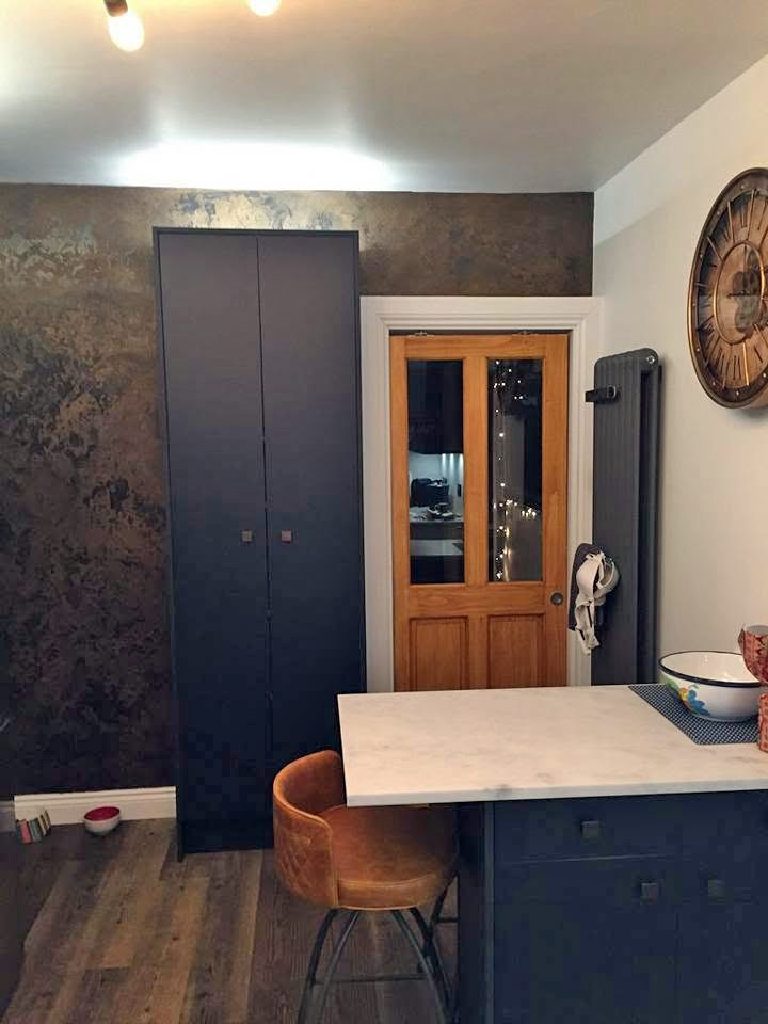
There is also a metallic plaster proper, where the effect comes from the material rather than the wax: a large quantity of fine varicoloured metallic shot-powder replaces the usual marble powder, giving a smooth, velvety surface that changes with the light and the angle you stand at. It is available in silver, golden and bronze effects. For foil and real metal finishes, see Metallic.
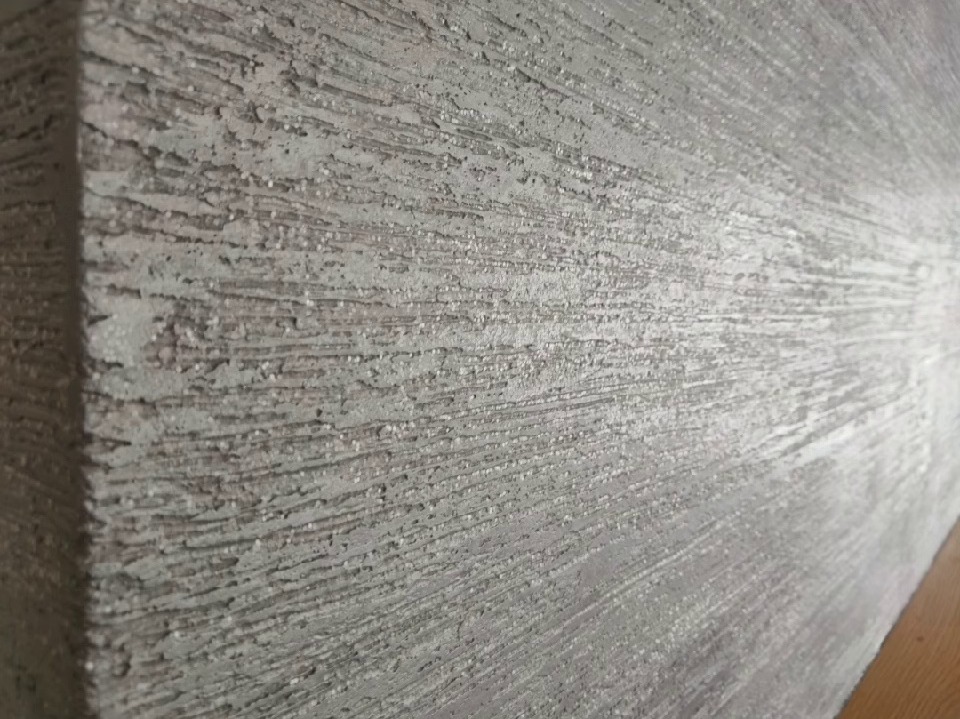
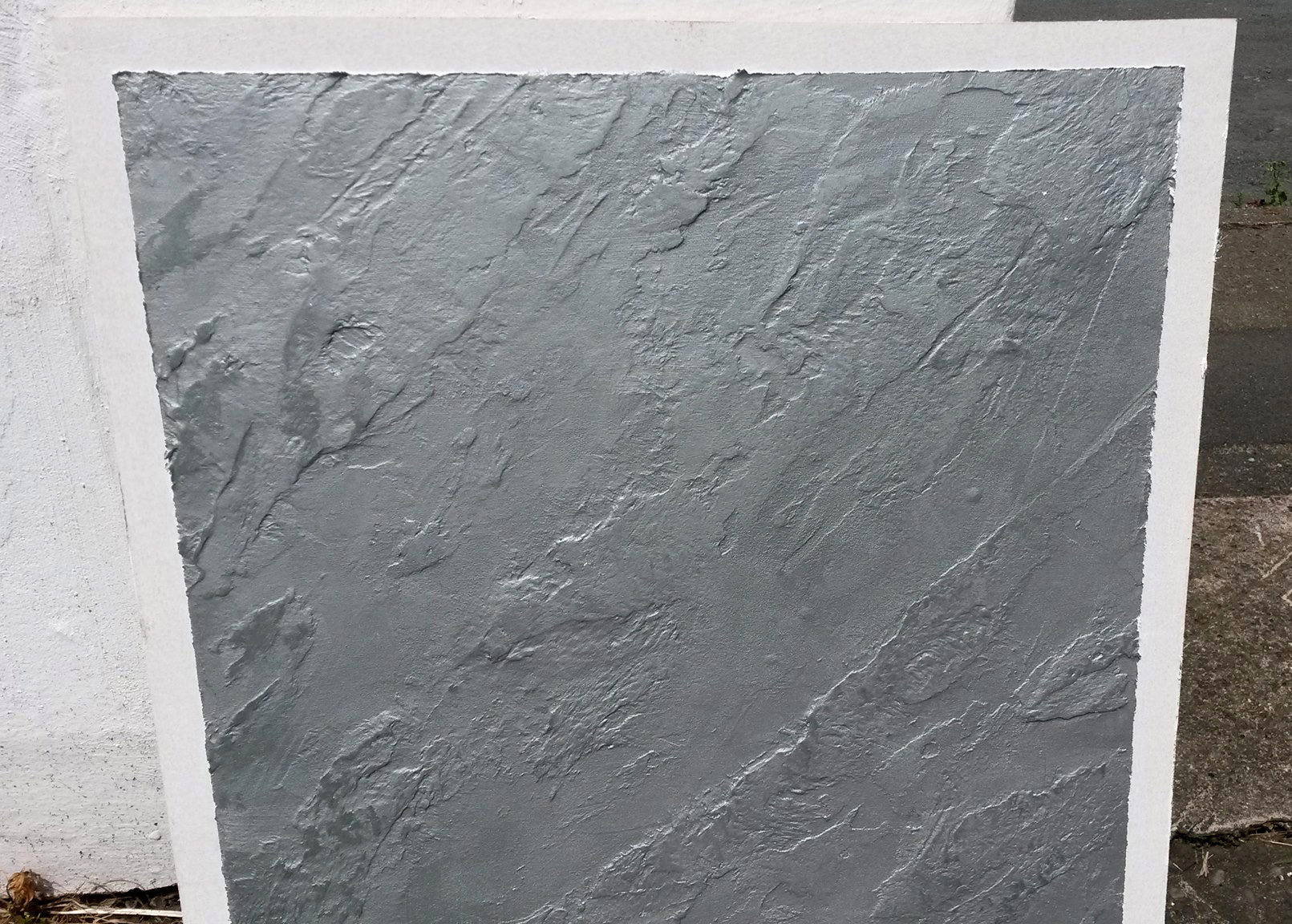
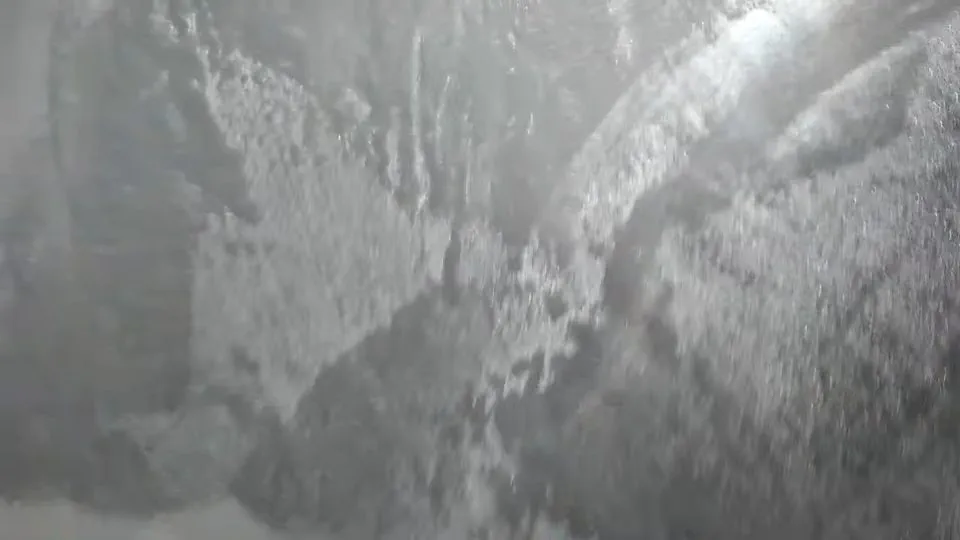
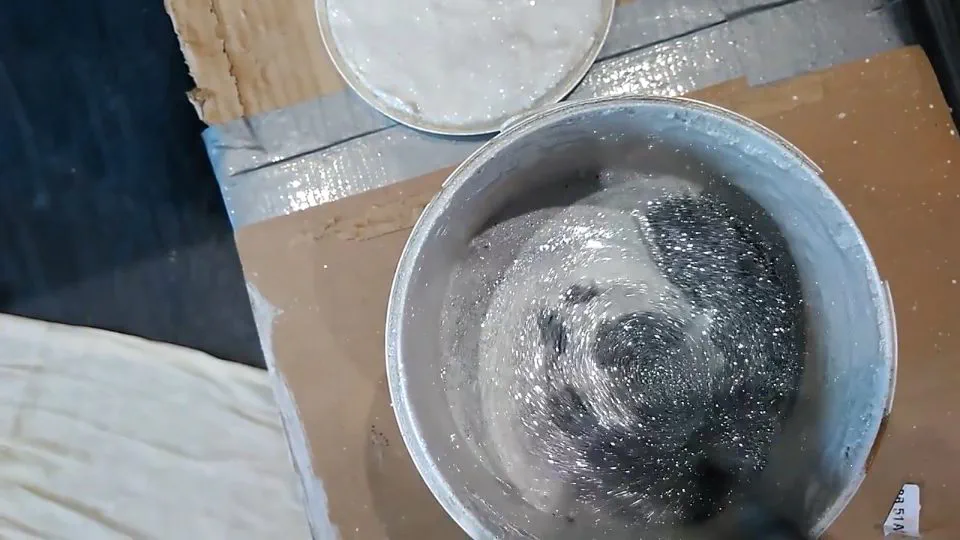
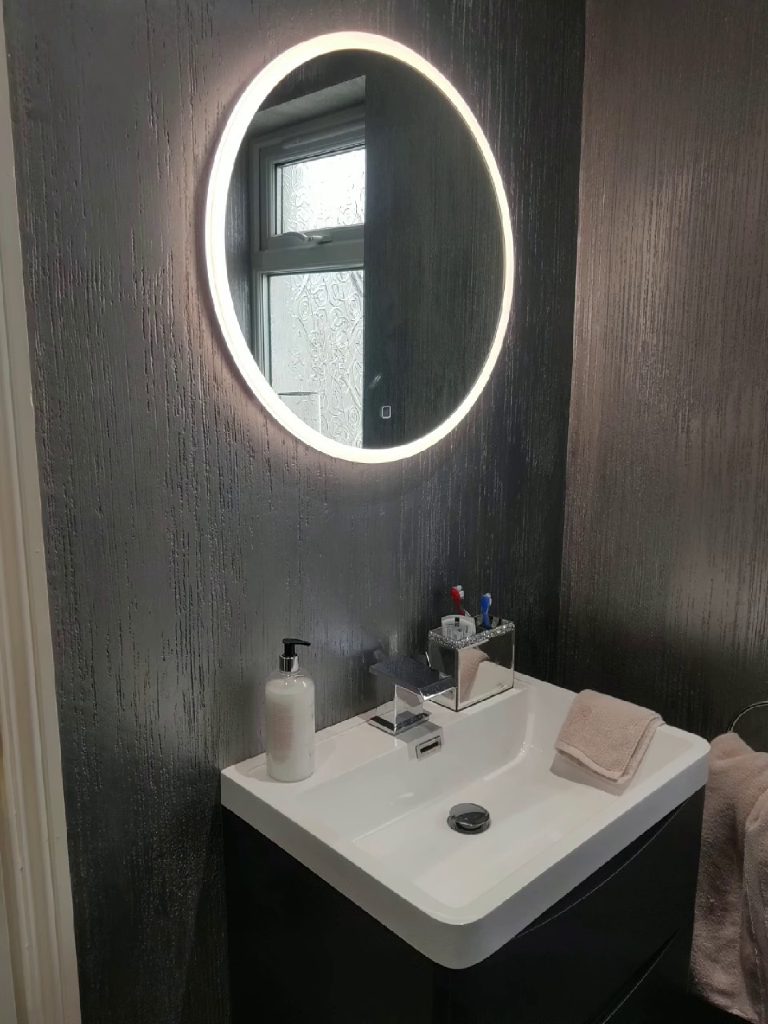
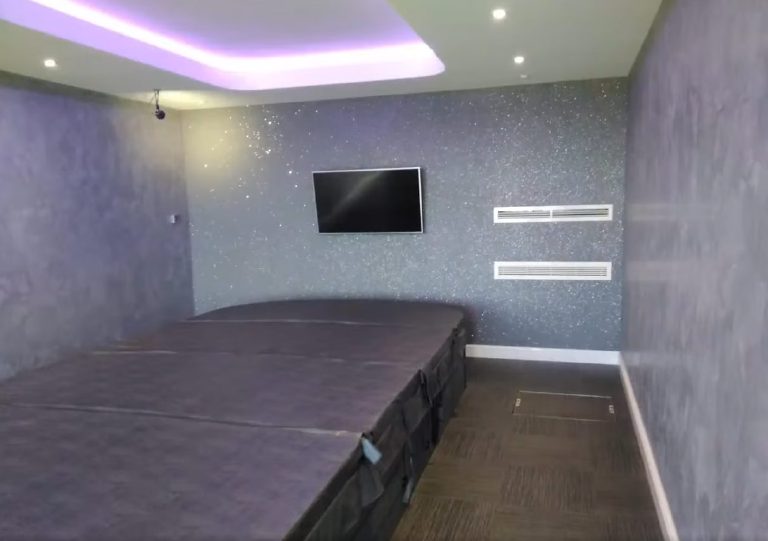
Glitter can be worked into the plaster itself or into the wax over it, which is a different thing from the flake finishes on the Decorative Finishes pages. Here the sparkle is held inside the surface rather than sitting on it, so the wall keeps the texture and the depth of the plaster and only gives the glitter up when the light moves across it.
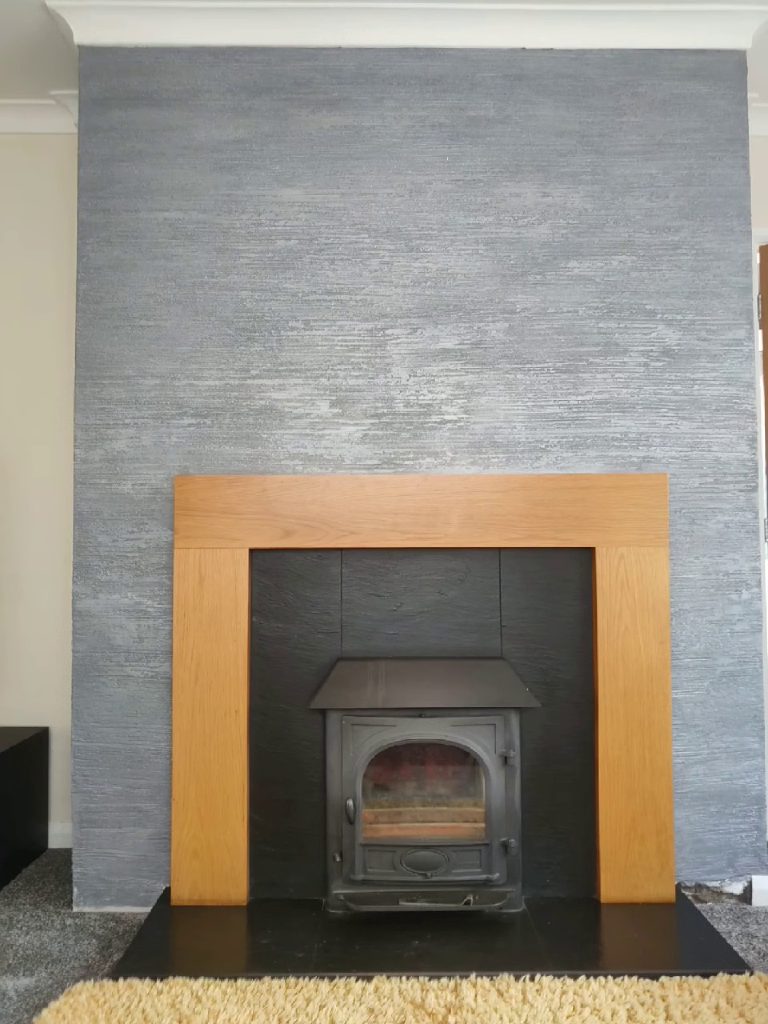
It can be as restrained as you like. A fire breast we did in grey plaster carries no more than a hint of it — square on it reads as plain grey, and it is only from an angle that the face comes alive. At the other end, an office entrance hall in white Marmorino was waxed with a pearlescent white and silver wax with silver glitter added, so the whole hall lifts under the lighting.
Our Crystal Quartz is the same idea in a stone finish, with the flake worked through the body of the material rather than laid on it.
Isle of Man
2025
Isle of Man
2024
Isle of Man
2020
Isle of Man
2020
Isle of Man
2020
Isle of Man
2020
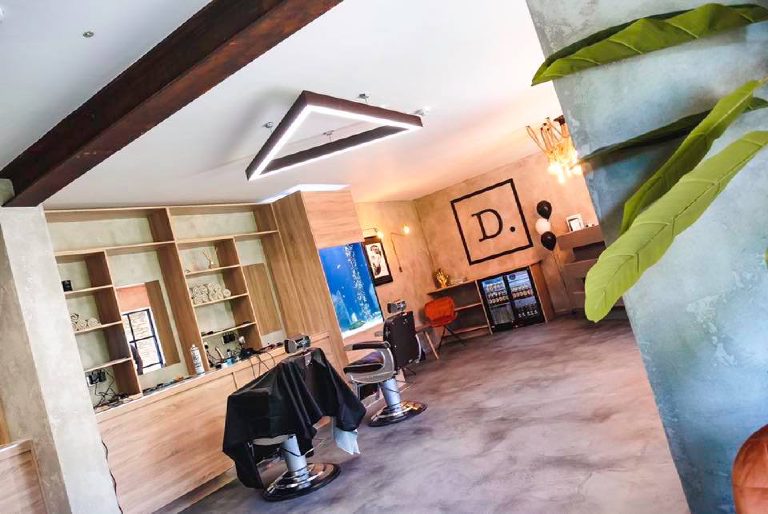
Tynwald Mills, St Johns, Isle of Man
2019
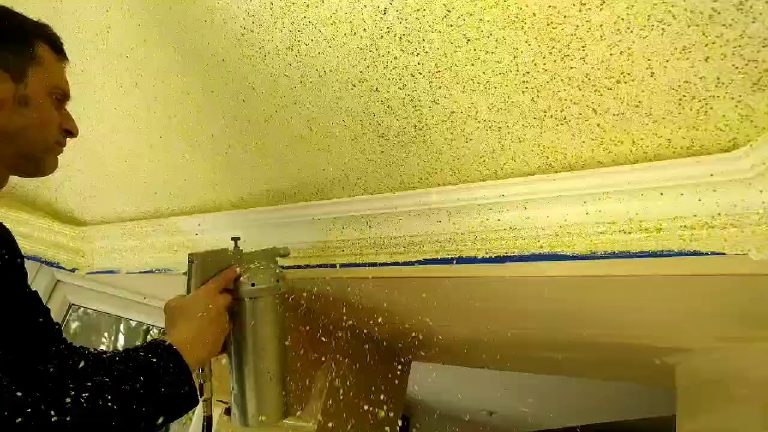
Isle of Man
2019
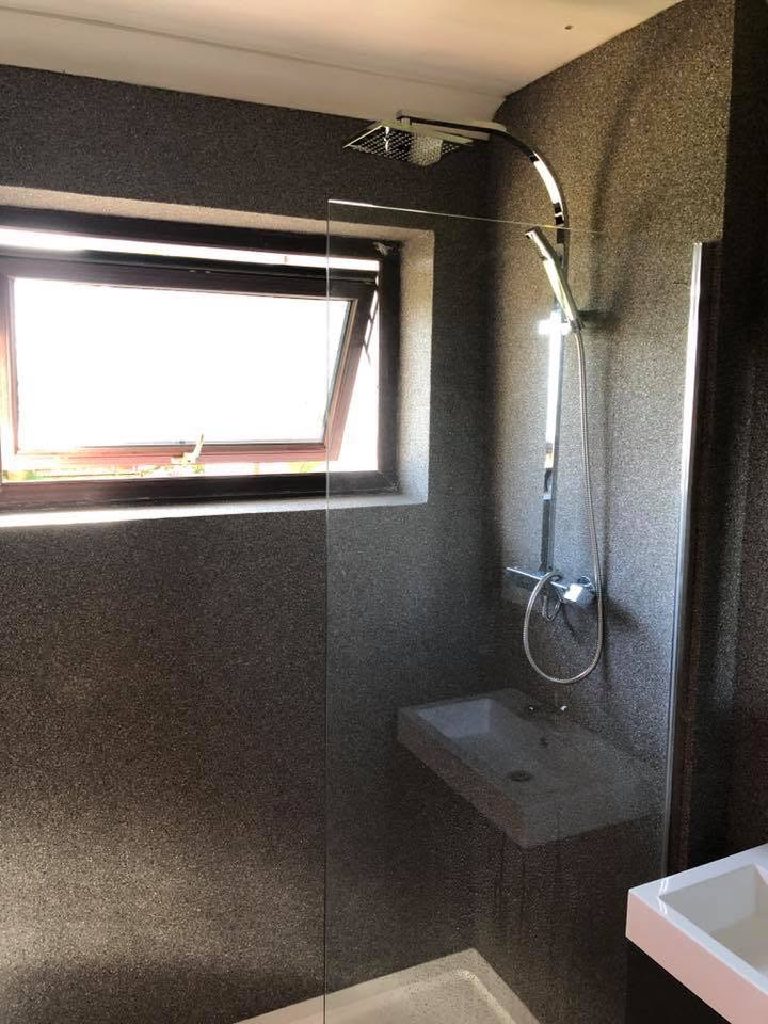
Baldrine, Isle of Man
2019
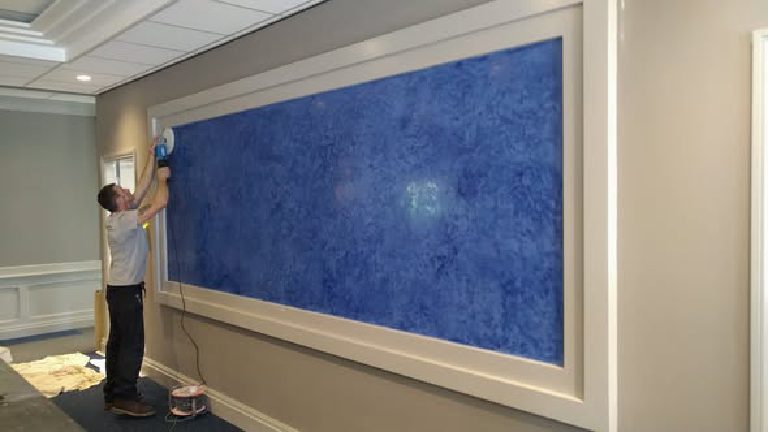
Mount Murray, Isle of Man
2018
Isle of Man
2018
Onchan, Isle of Man
2018
Onchan, Isle of Man
2017
Isle of Man
2017
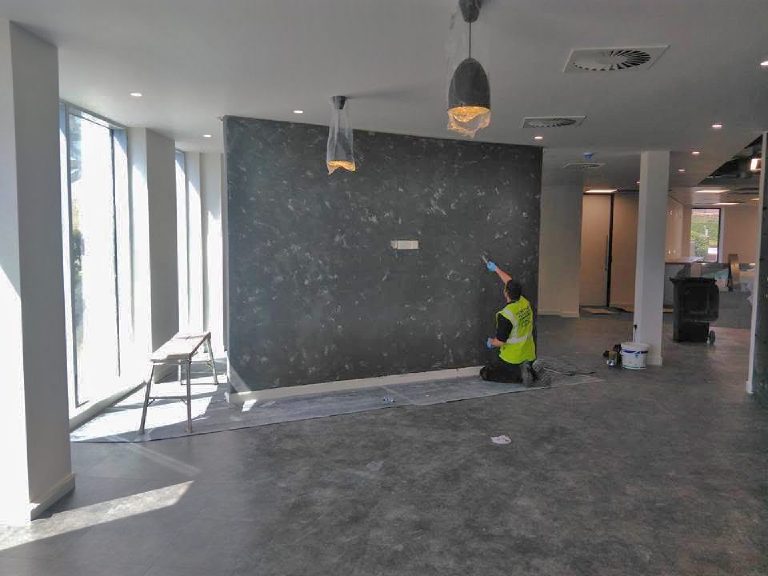
Douglas, Isle of Man
2017

Douglas, Isle of Man
2017
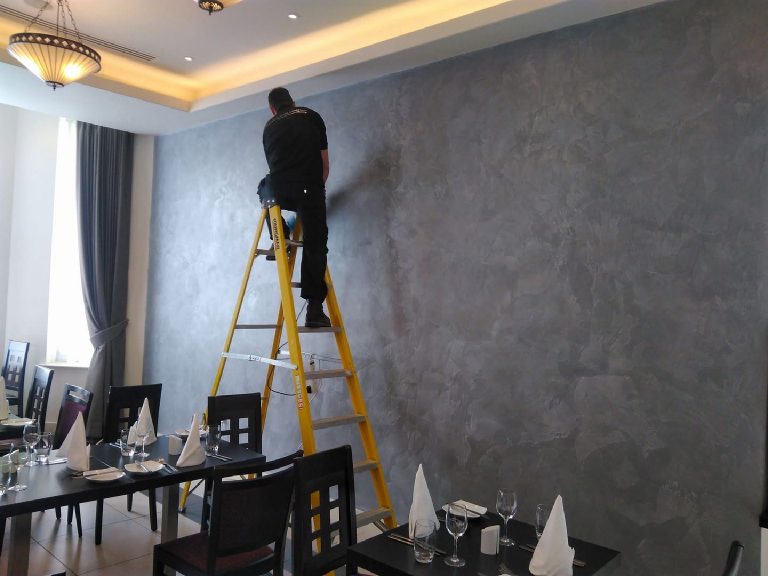
Douglas, Isle of Man
2017
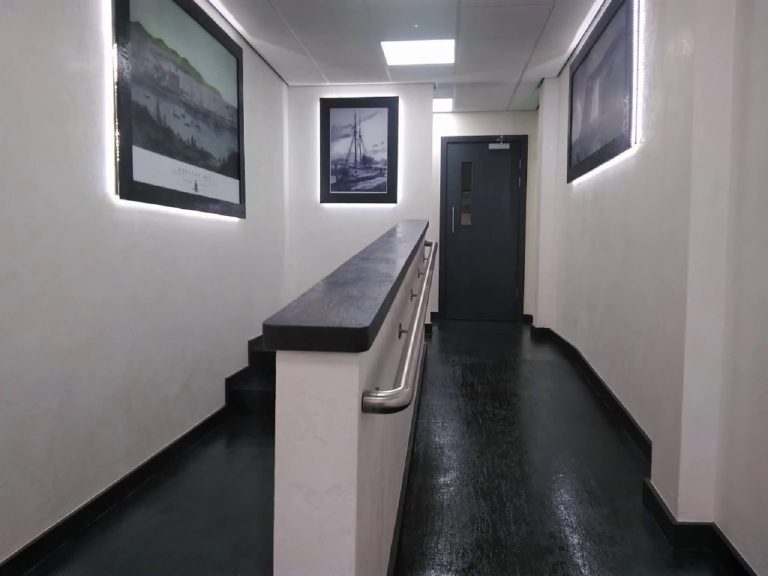
Douglas, Isle of Man
2017
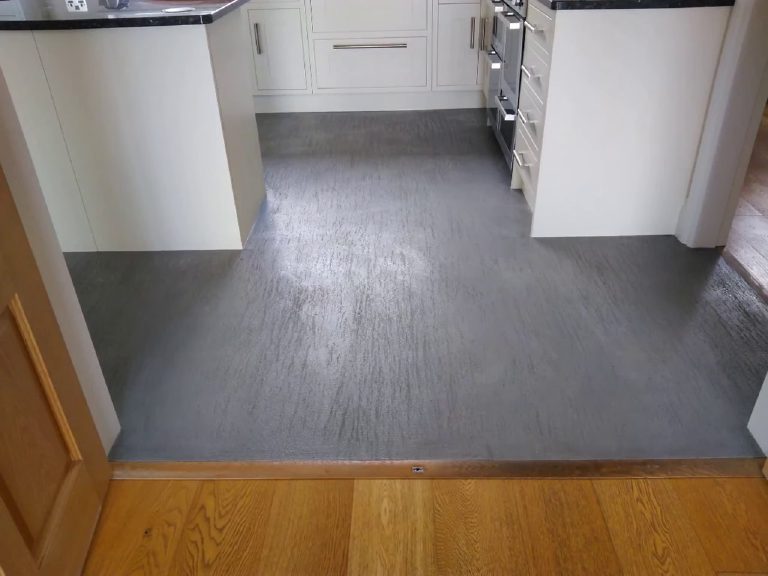
Isle of Man
2017
Isle of Man
2017
Isle of Man
2016
Isle of Man
2015
Peel, Isle of Man
2014
Isle of Man
2014
Ramsey, Isle of Man
2014
Baldrine, Isle of Man
2013
2013
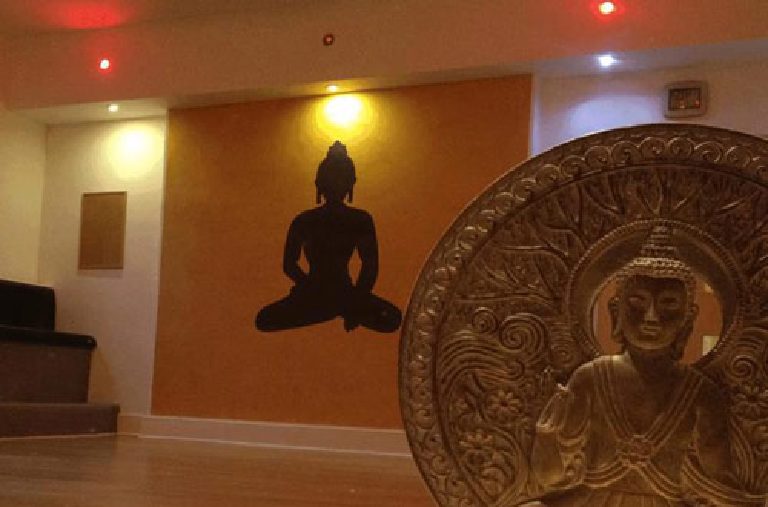
Ramsey, Isle of Man
2013
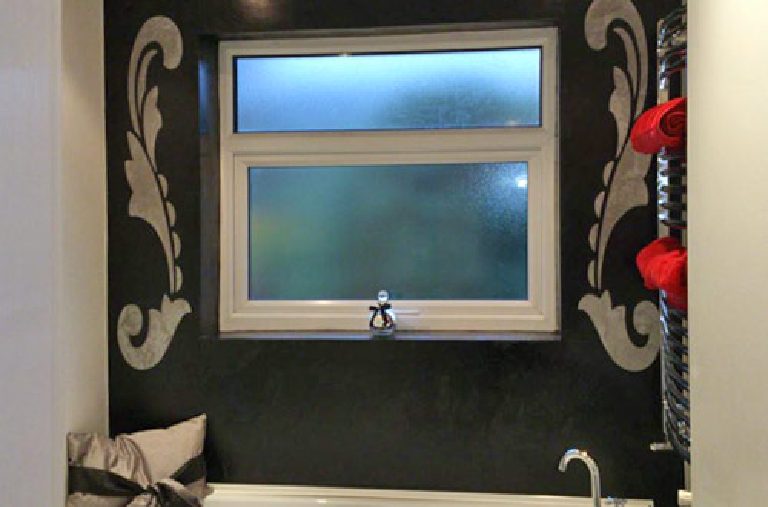
Onchan, Isle of Man
2012
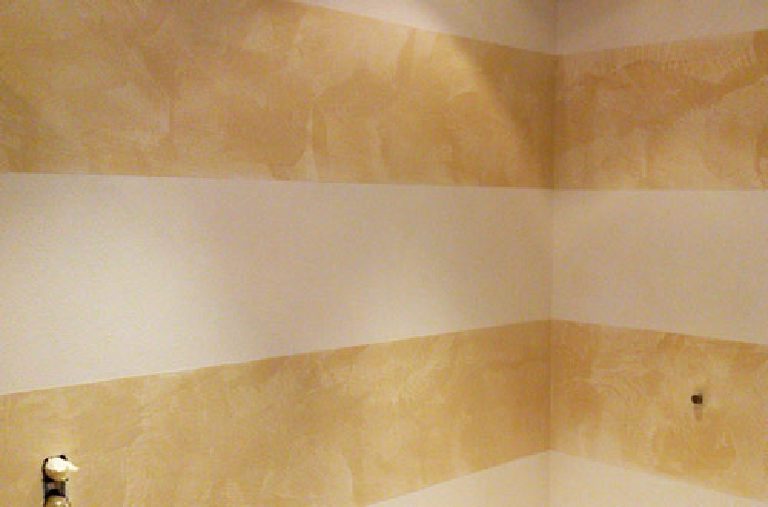
Douglas, Isle of Man
2012
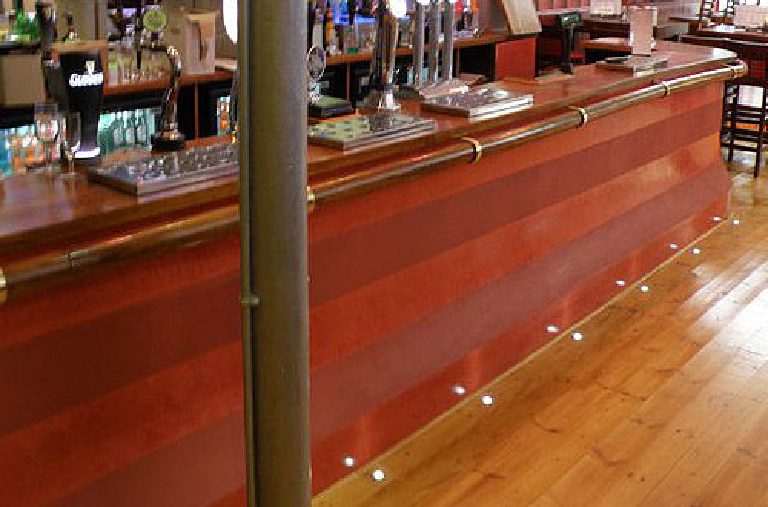
Ramsey, Isle of Man
2011
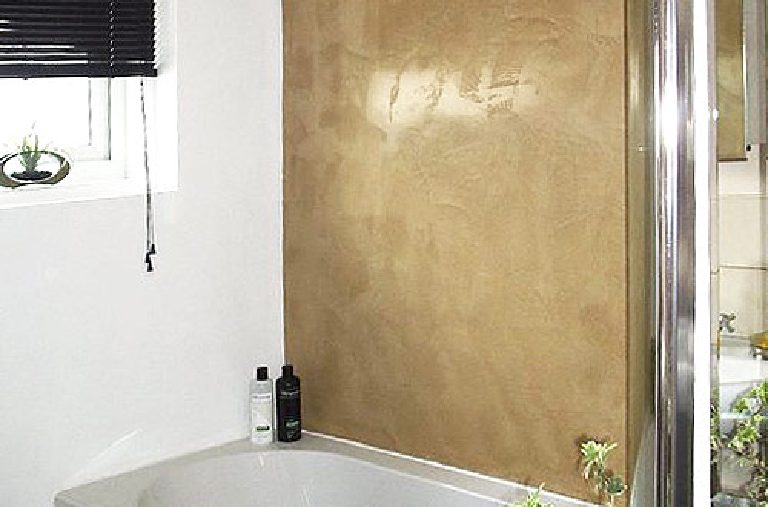
Sulby, Isle of Man
2010
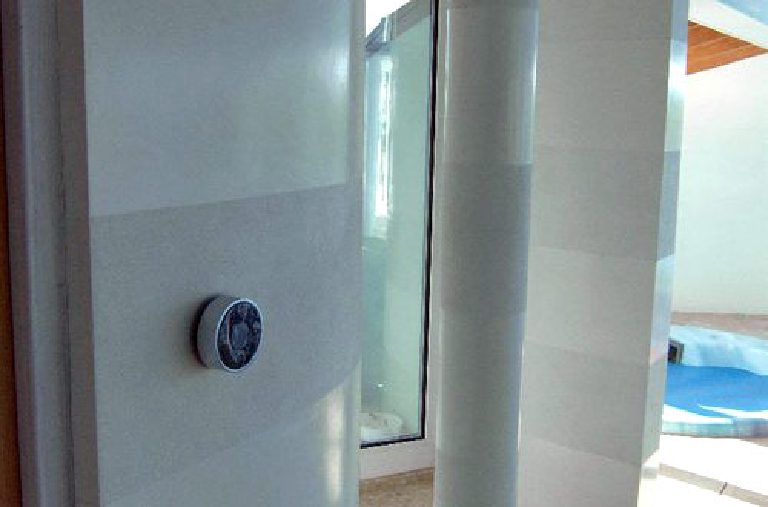
Port Erin, Isle of Man
2010
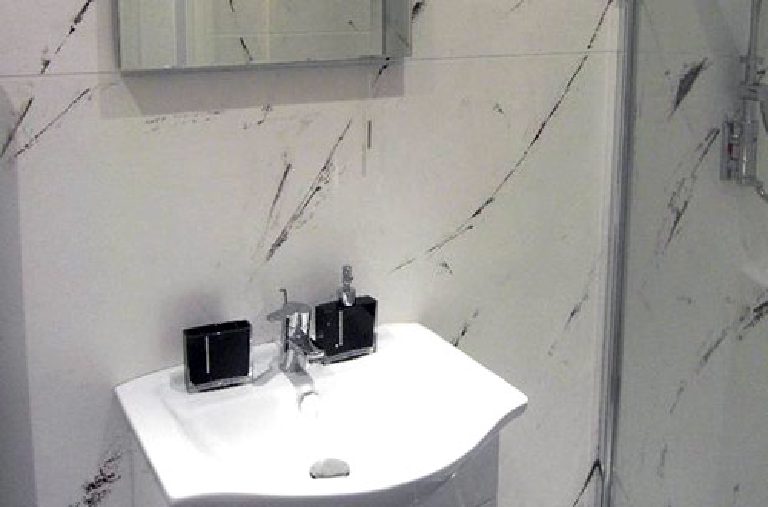
Isle of Man
2010
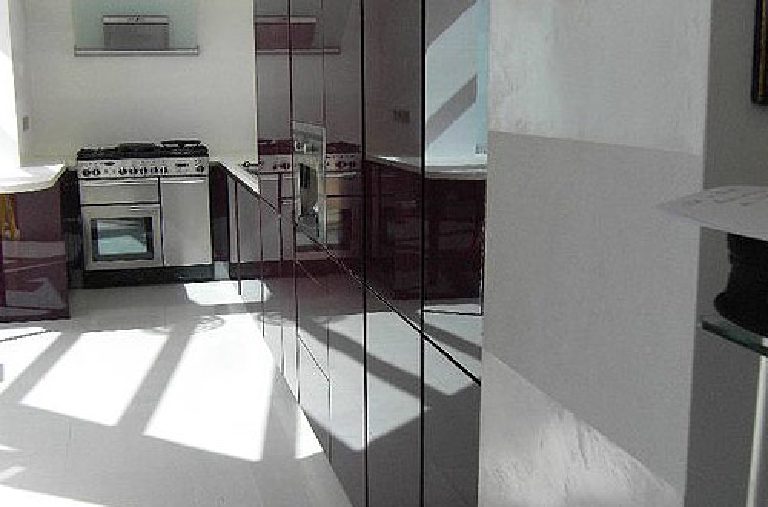
Port Erin, Isle of Man
2010
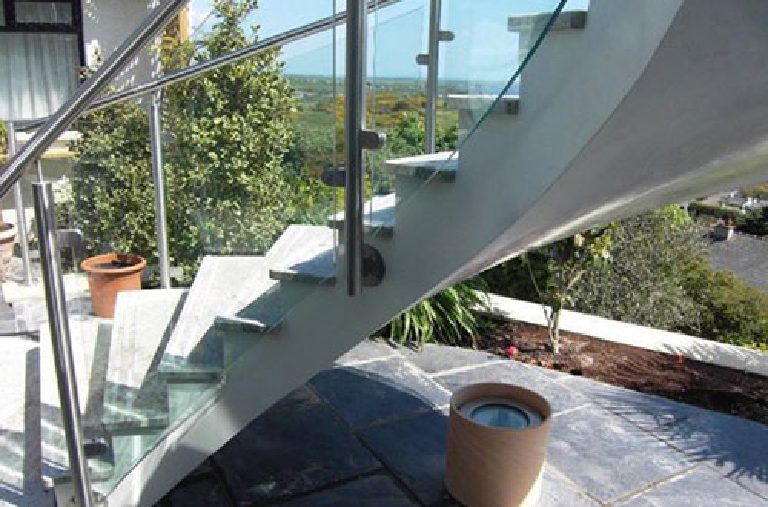
Port Erin, Isle of Man
2010
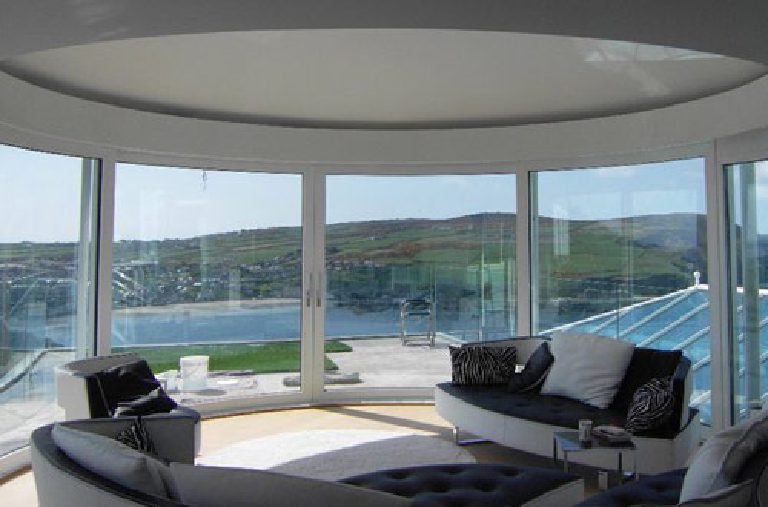
Port Erin, Isle of Man
2010
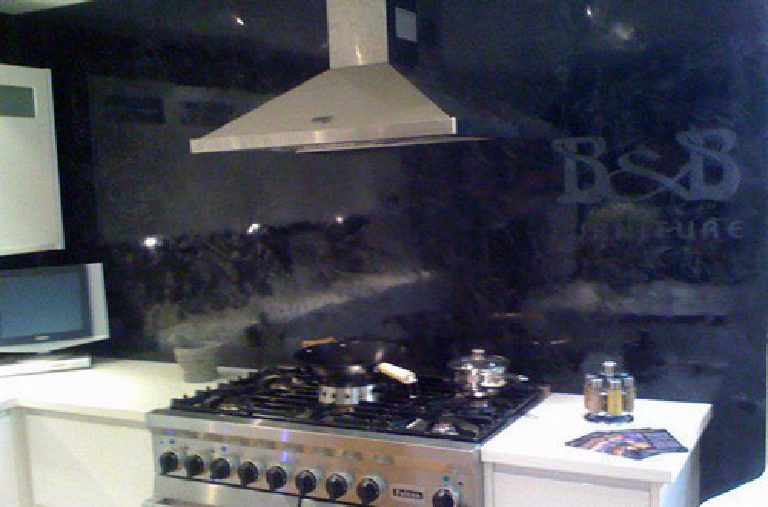
Union Mills, Isle of Man
2010
Tell us about the room and we can talk through how these finishes can transform your space.