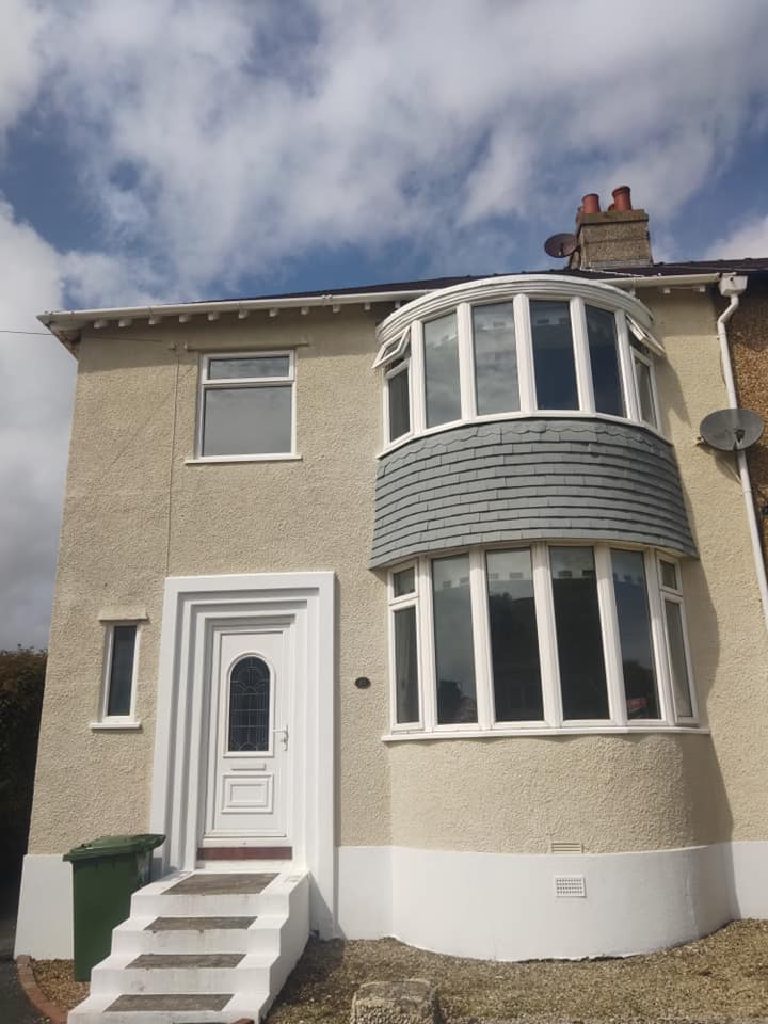
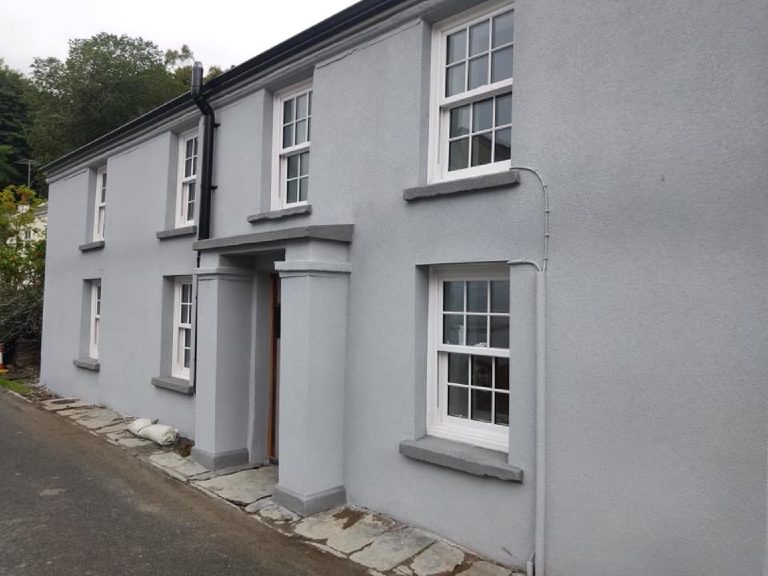
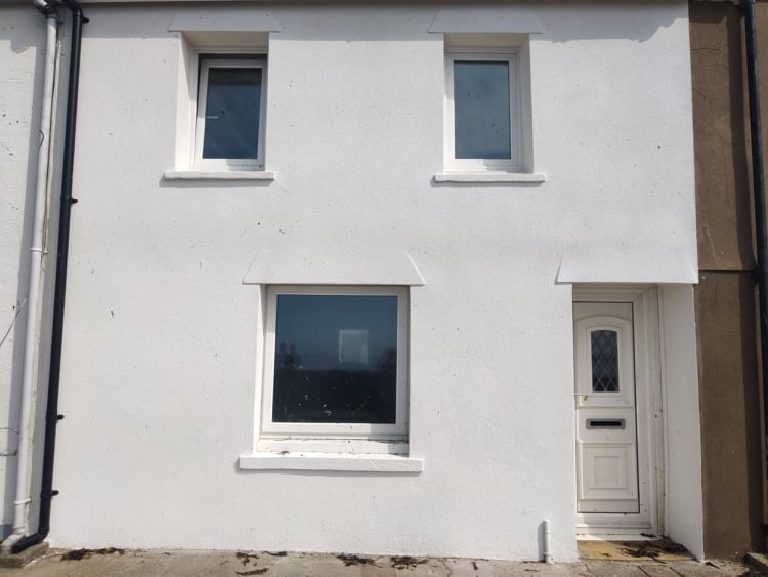
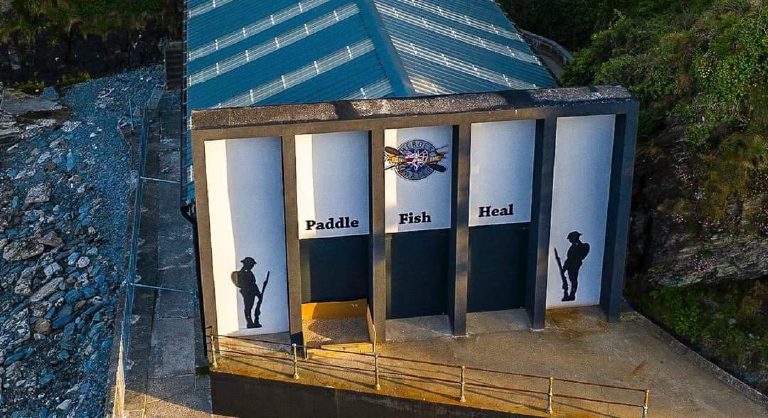
Spray Cork Render is an innovative, environmentally-friendly rendering system that uses natural cork particles to create an insulating, breathable, and decorative external finish. This sustainable solution provides thermal and acoustic insulation while creating an attractive, natural-textured surface.
The cork content makes this render naturally flexible, helping to bridge hairline cracks and provide excellent weather resistance. Cork is also naturally resistant to mould and algae, maintaining its appearance with minimal maintenance.
Applied by spray application for efficient coverage, Cork Render is an excellent choice for eco-conscious projects requiring both aesthetic appeal and functional performance.
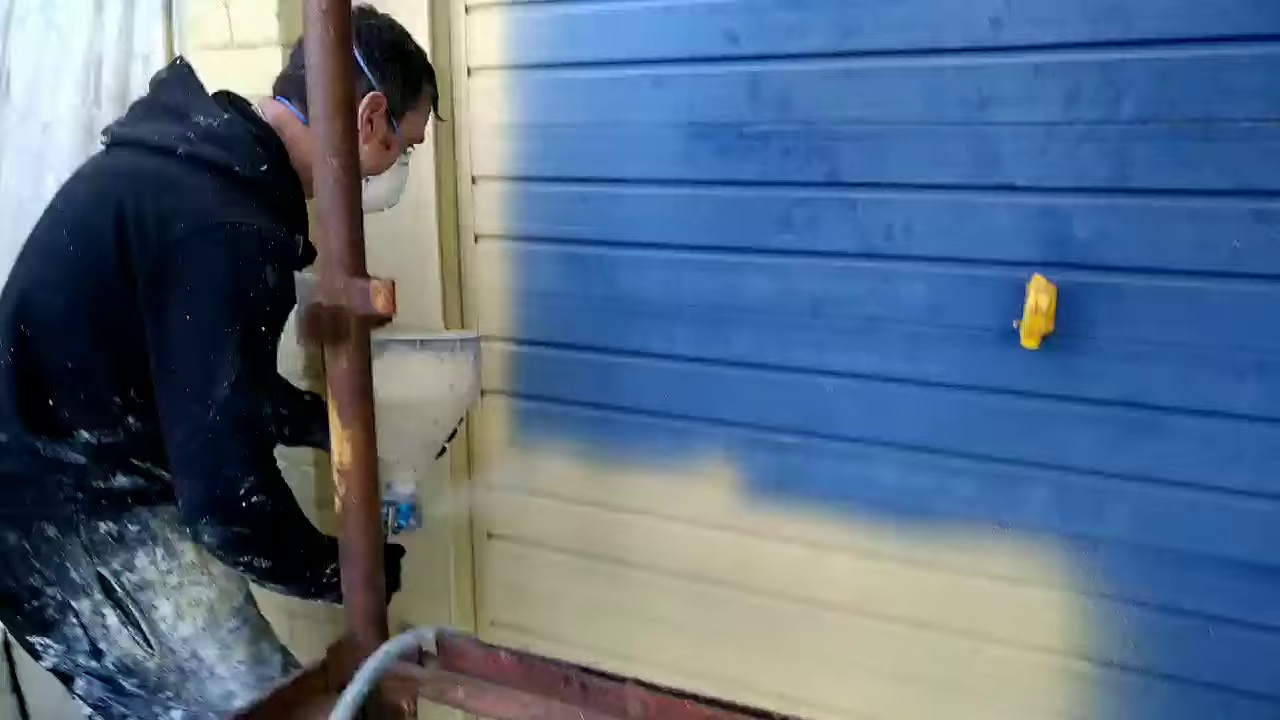
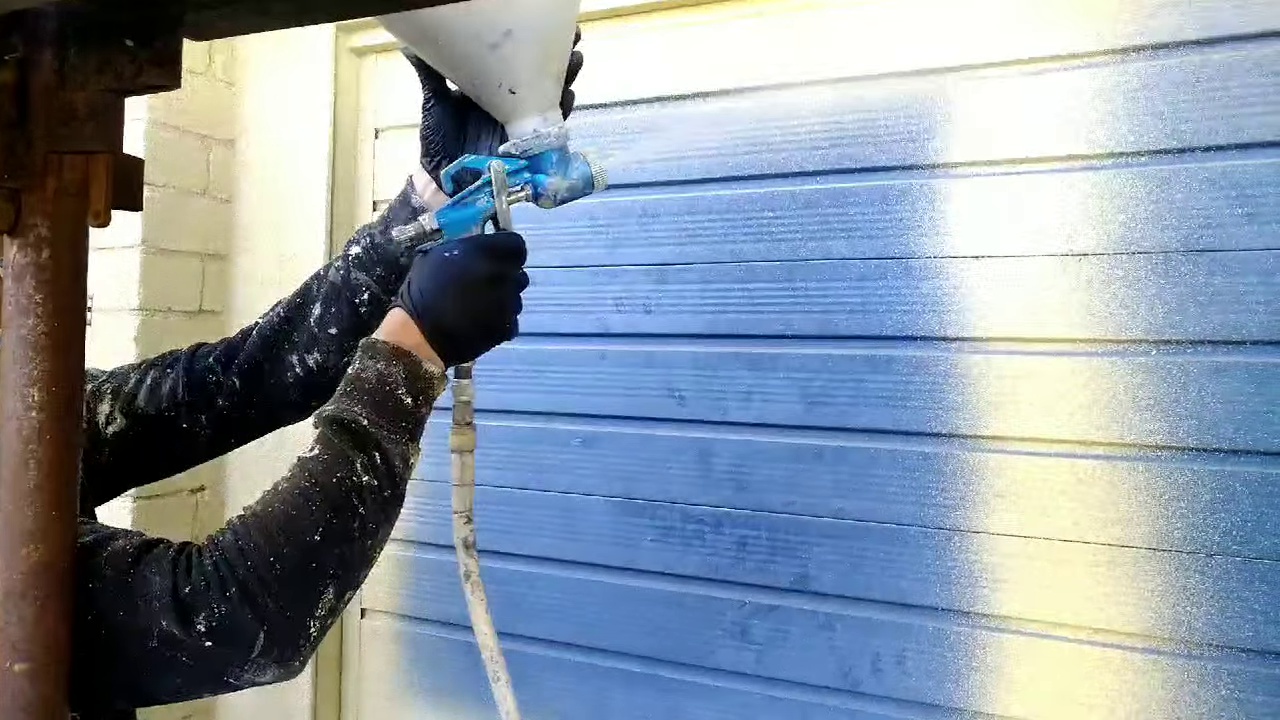
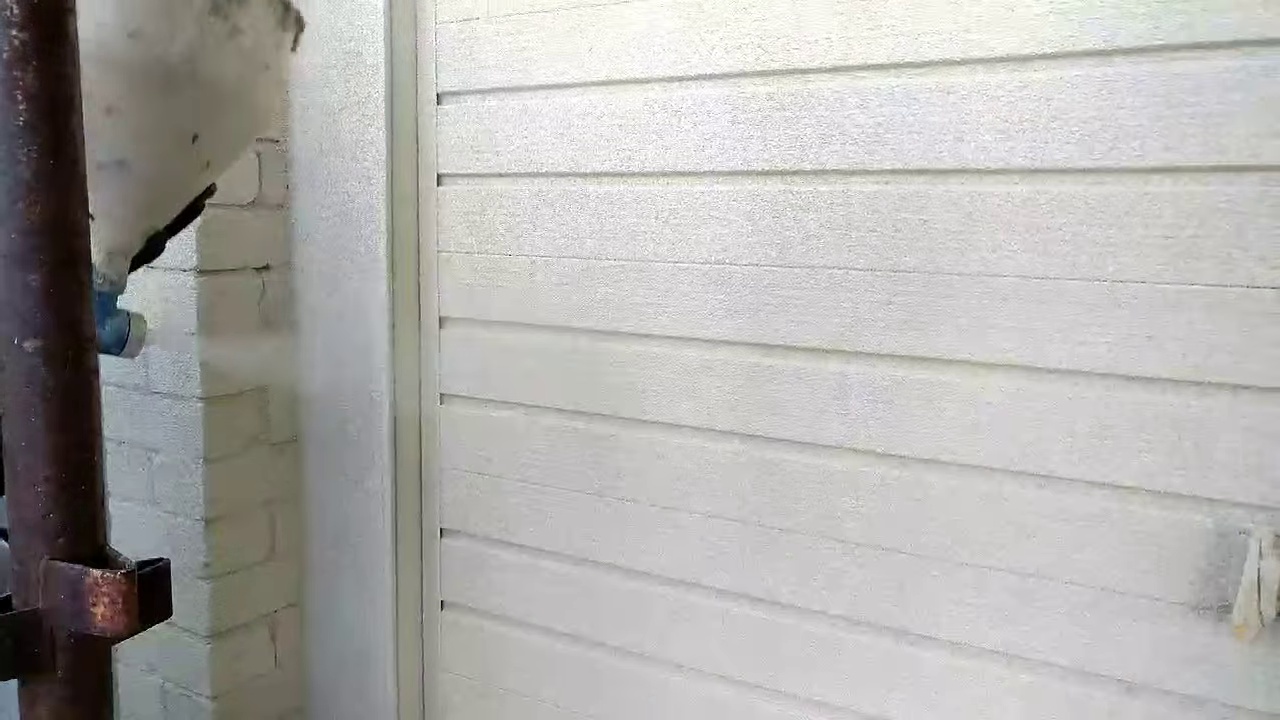
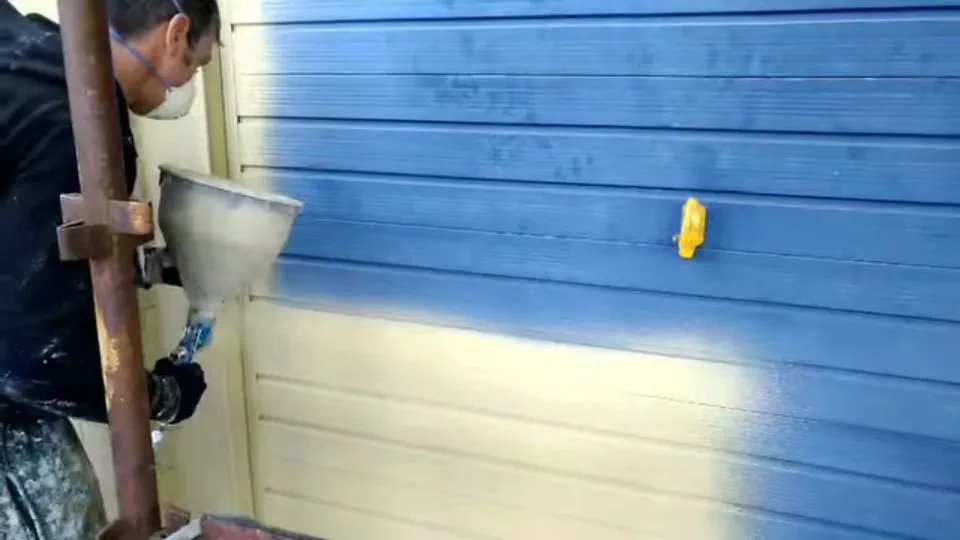
It sticks to far more than masonry. Because the coating is super-adhesive it will cover a range of surfaces including steel — as the garage door below shows, where the door and the wall beside it end up as one continuous cork finish.
You may also see this product under the name ThermoCork, and the wall system itself called CorkWall. CorkSol is the current name for what used to be sold as ThermoCork — same cork, same system.
What does “eco” actually mean?
The bark comes off; the tree stays standing, and grows it back.
Sustainable: causing little or no damage to the environment, and therefore able to continue for a long time. Eco: not harming the environment; eco-friendly.
So many companies use the word eco these days, but what does it really mean? Are electric cars eco? Is polystyrene eco when it is used to insulate?
At Venetian Plaster Company we are proud to offer a sustainable render product which has a negative carbon footprint. The cork is stripped from the bark of the cork oak without felling the tree; the bark grows back, and the stripping releases oxygen into the air. The raw material for the render is, in other words, a by-product of a tree that keeps on growing.
The manufacturer puts a figure on it: the cork in a coating on an average house offsets over 500kg of CO2. We have not verified that ourselves, so take it as their number rather than ours — but the principle behind it is sound, and it is a good deal more concrete than most of what gets called eco.
Cork on the inside, too
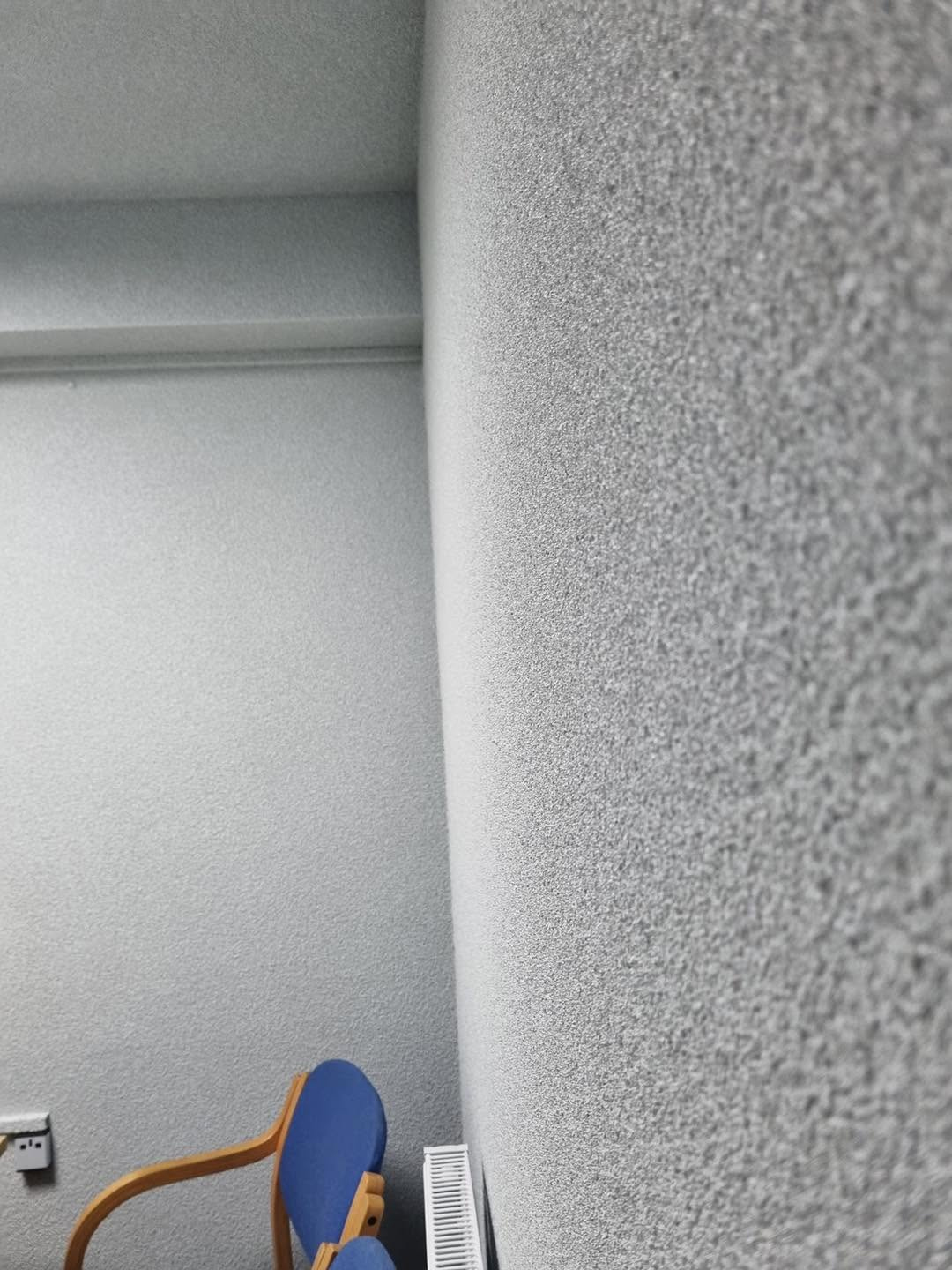
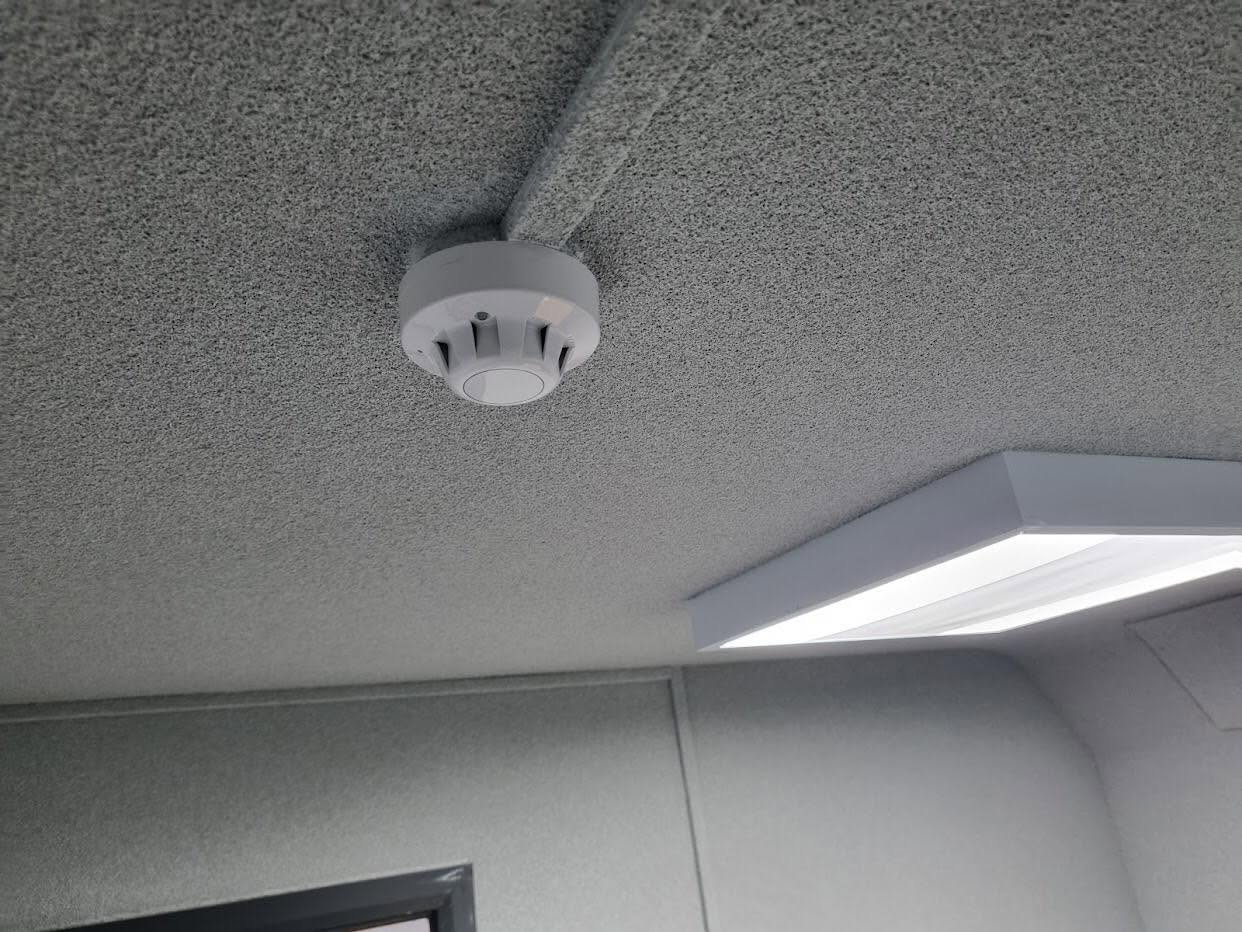
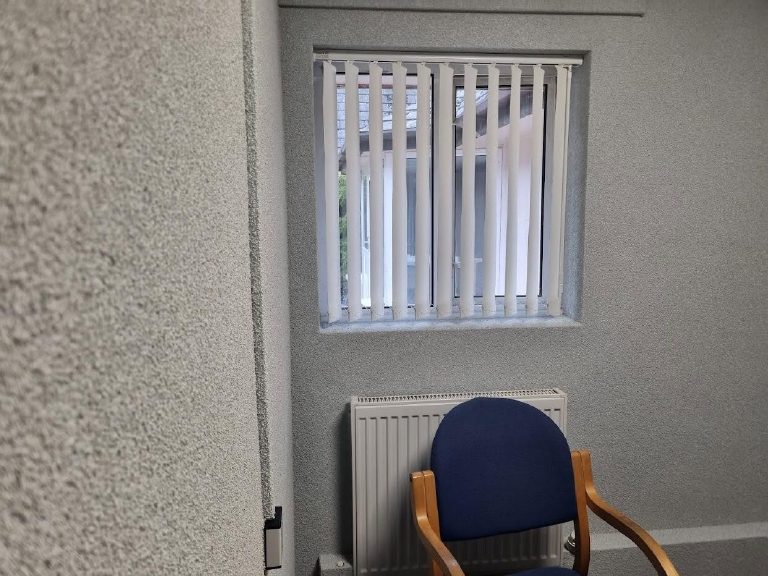
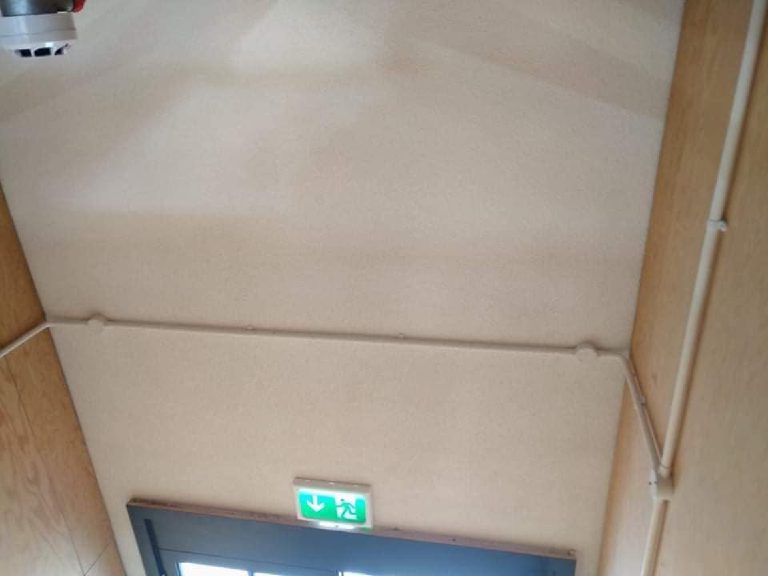
Inside an office: 8mm of cork, then a skim and paint.
Cork is not only an external coating. Because it is breathable and holds its own warmth, a thin sprayed layer works on internal walls as well — and it is often the answer where damp and mould keep coming back.
The coating goes on at around 8mm finished, so there is no need to move sockets, switches or fixtures to make room for it. It can be skimmed over with a thin coat of plaster for a smooth surface and then painted, so you decorate exactly as you would any other wall. What you are left with is invisible: a surface that mould and damp cannot form on.
That is the practical advantage over the alternatives. Cavity wall insulation means drilling and injecting, and does nothing at all for a solid wall with no cavity. Insulated boards and panels mean stripping out fixtures and fittings, and they are thick enough that you notice the room getting smaller. A sprayed cork layer costs you 8mm and a coat of paint.
Why damp forms in the first place
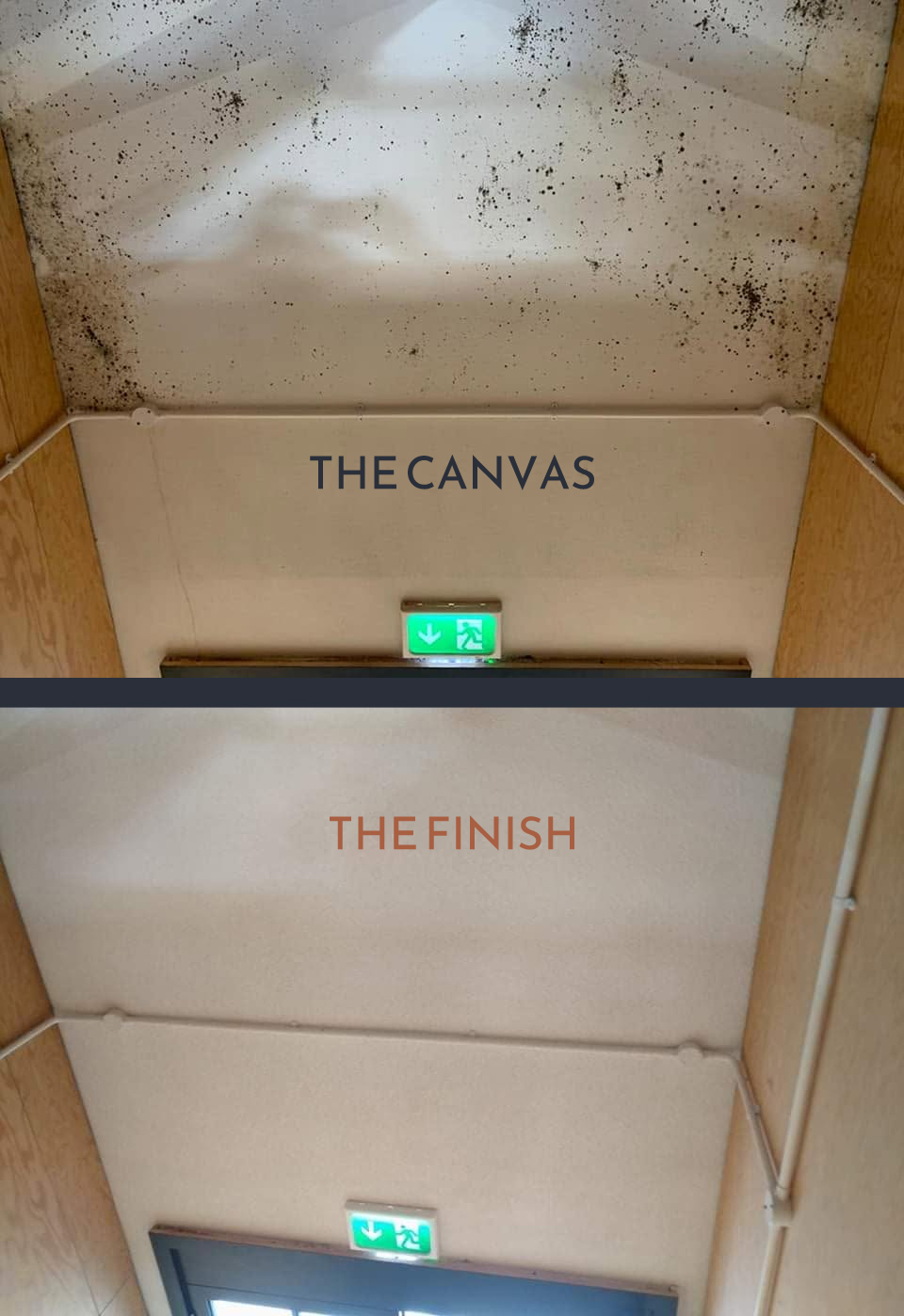
A cold rear lobby, before and after. The mould had nothing to do with cleaning.
Damp on a wall usually comes from one of three places: rising damp drawn up out of the ground, water getting in from a leak or failed pointing above, or ordinary moisture from living in the house — washing, cooking, drying clothes, breathing.
That last one is the most common and the least obvious. Moisture in the air is drawn to the coldest surface in the room, which is why it appears on one particular wall and not the others. Fix the cause first — the roof, the gutter, the damp proof course, the ventilation. But where the cause is simply a cold surface, warming that surface stops the condensation happening at all. That is what the cork does, and it is the same principle behind the Old Market Hall job on this site, where a cold rear lobby had a condensation and mould problem that no amount of cleaning would settle.
Pebbledash
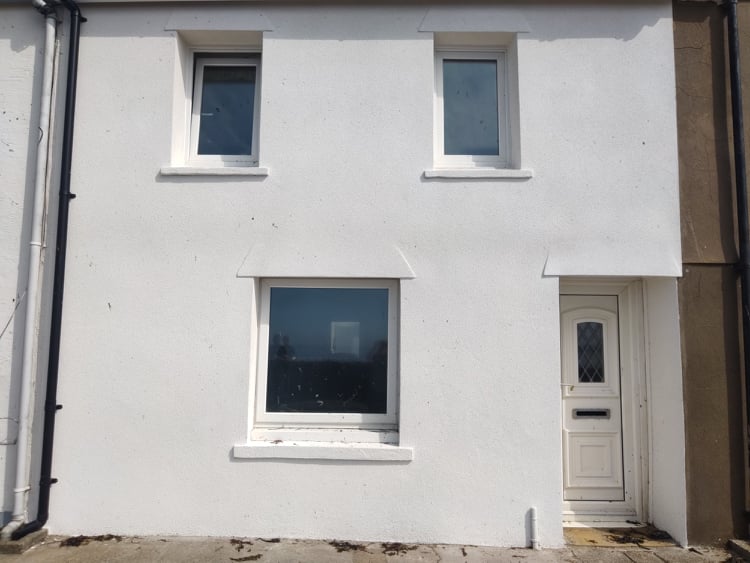
Straight over the dash rather than hacking it off.
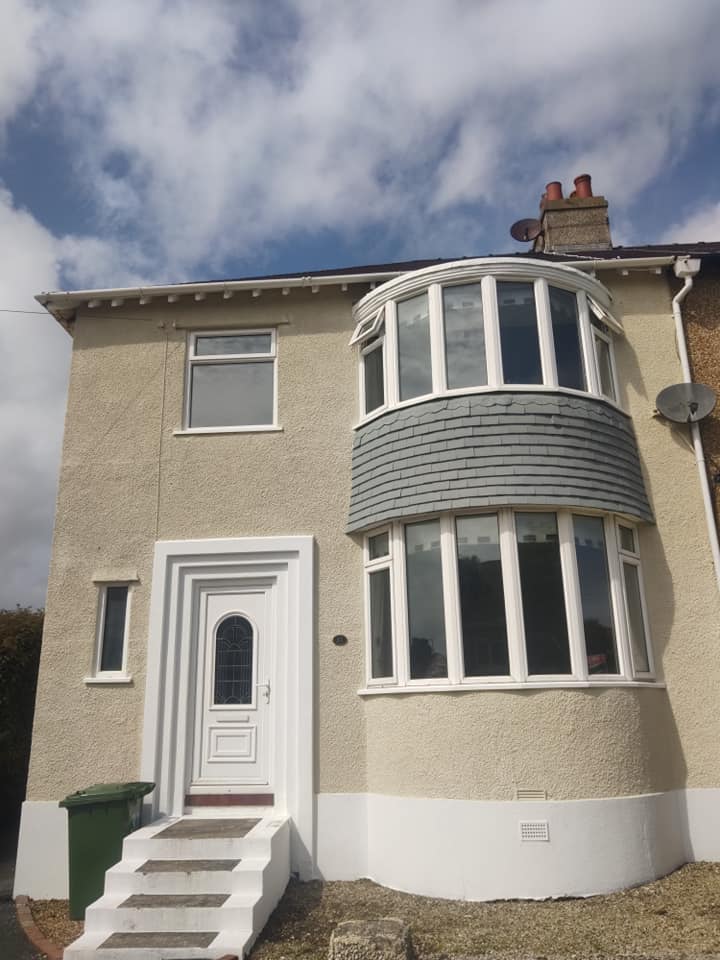
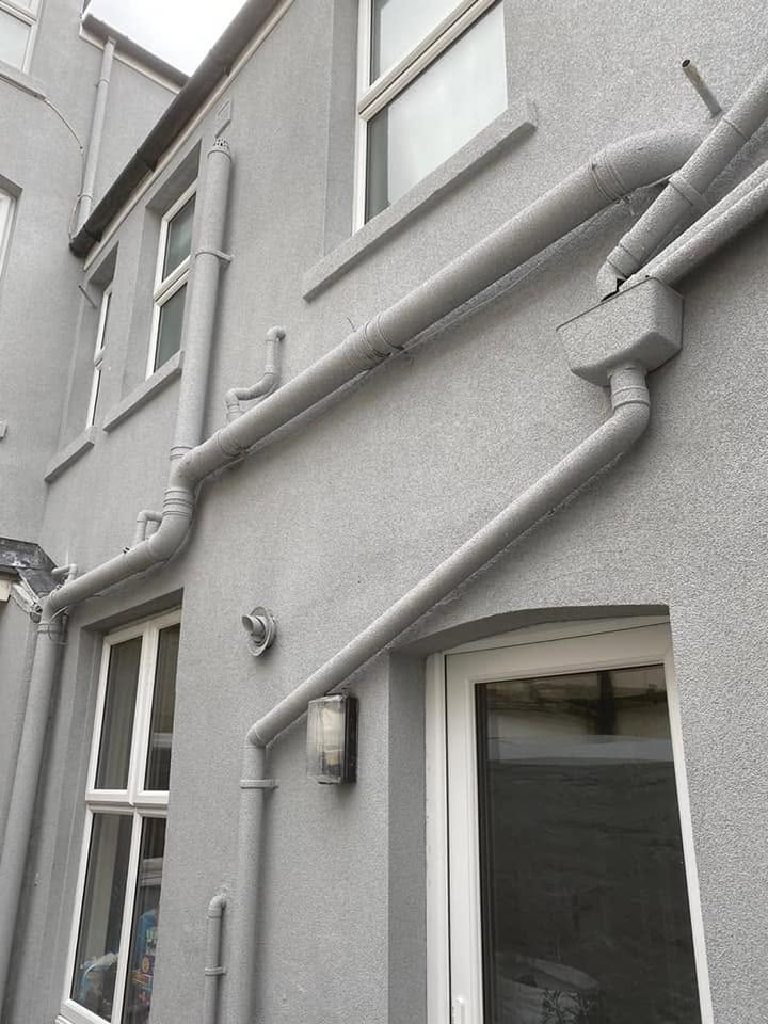
Whether you want to remove it, refresh it or simply render over the top of it, spray cork gives you a way out of pebbledash that is hard-wearing and looks the part. It is super-adhesive, so it will take to the dash rather than needing it hacked off, it is weather resistant, it insulates, and it comes in a good range of colours. See the Onchan job on this site, where failed dash that was letting water in was cured by going over it rather than stripping it back.
What it will go on — and what it won't
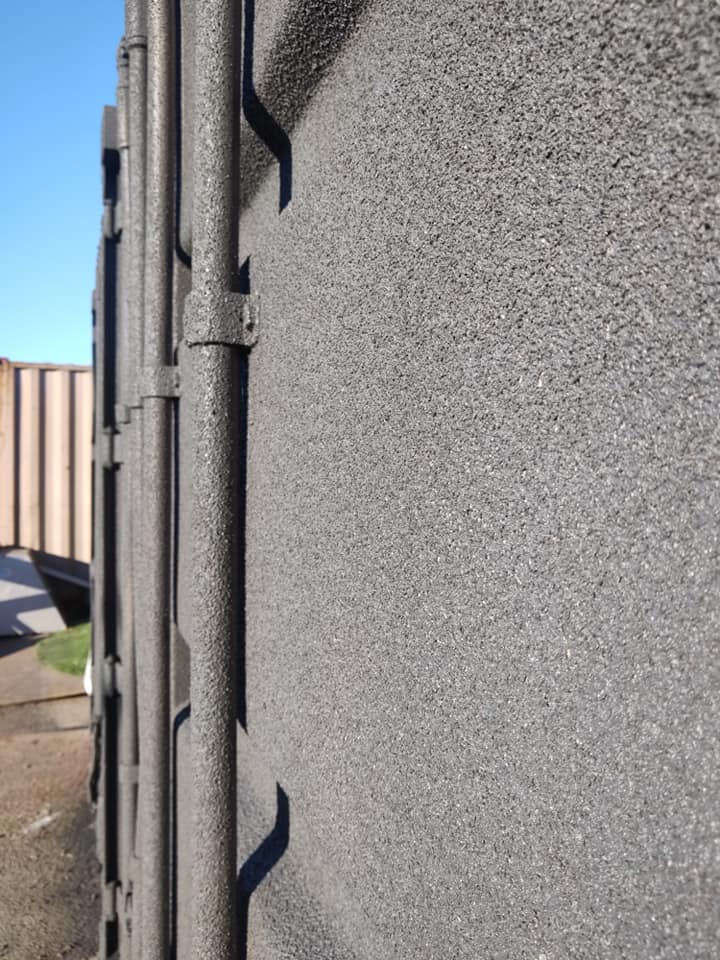
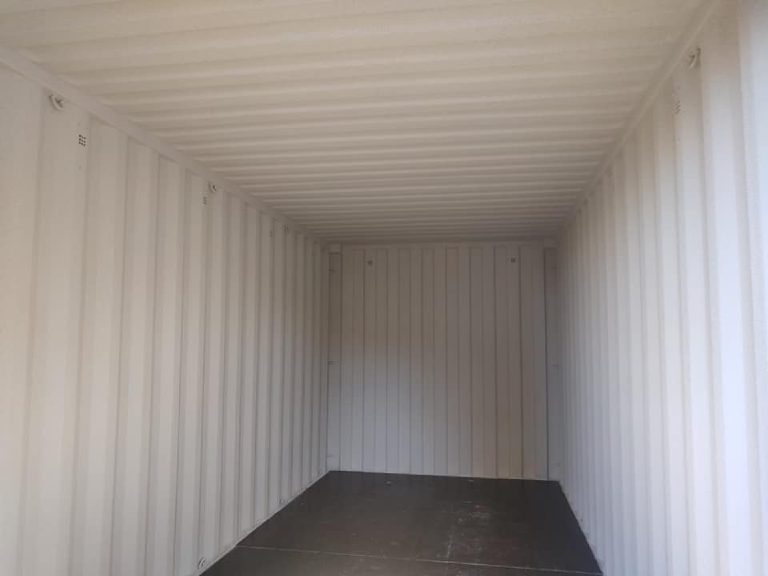
Straight onto the steel side of a container — and the ribs still read through it.
Cork sticks to almost anything. The one thing it will not take to is pure silicone. Beyond that: brick, block, existing render, pebbledash, dry dash, wet dash, stippled paint, steel.
Two honest qualifications, though, because they decide whether you are happy at the end.
You will still see the texture underneath. Sprayed straight onto pebbledash the coating is only a few millimetres thick, so the dash is softened rather than erased — and on bare brick the mortar lines still read through. If you want it flat, we put a base coat on first to take the texture out, and then spray over that. That is more work and it costs more, so it is worth deciding at quote stage rather than on the day.
It will not hold a wall together. Cork is a coating, not a repair. Render that has blown or come loose has to be cut out and made good before we spray, missing pointing has to be repaired, and very dusty brick may need priming. The finish is only ever as good as what is behind it.
How long it lasts, and what you have to do to it
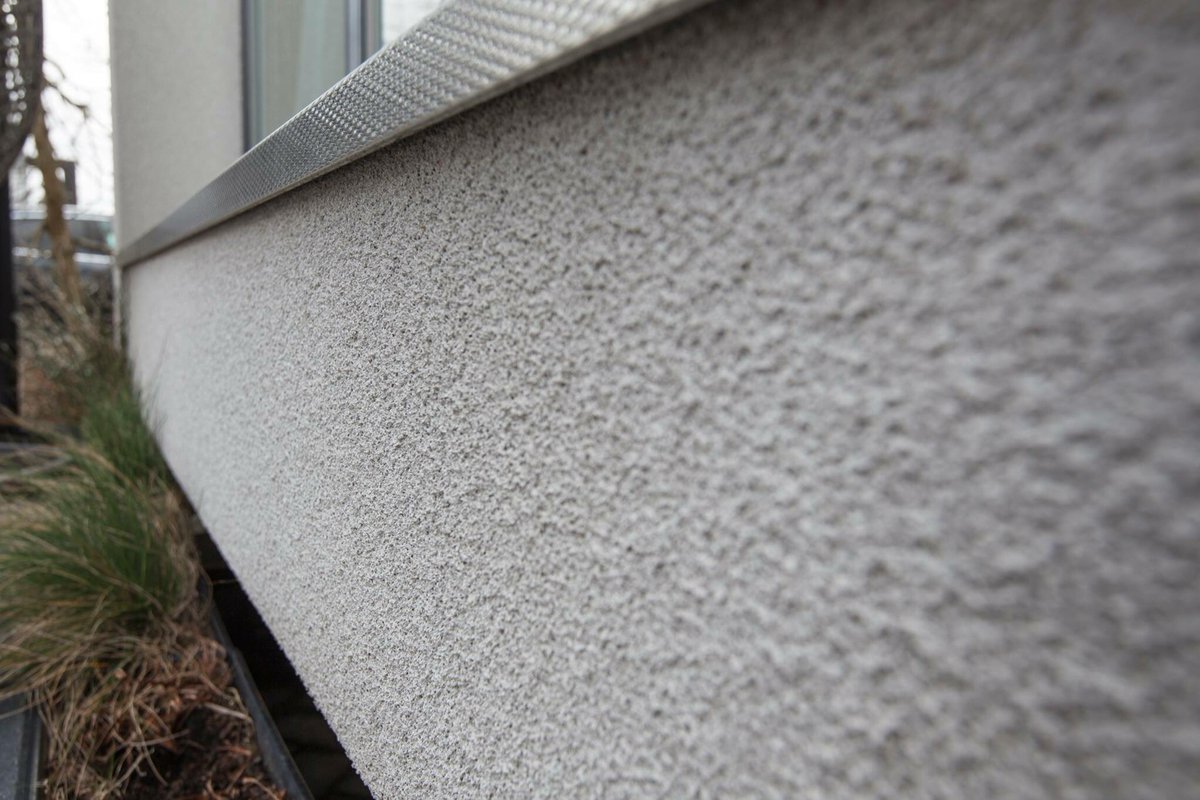
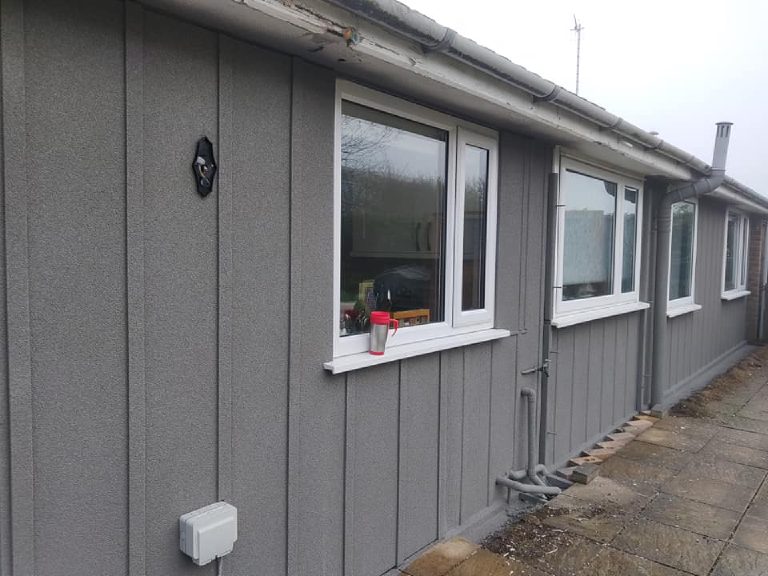
Along the wall, in raking light: no algae, no green, and nothing repainted.
The manufacturer puts the expected life of an external coating at twenty years and upwards. In practice the maintenance is a wash down once a year. Cork resists algae naturally, so it does not go green the way a painted render does, but it is not a surface you can forget about entirely.
If you jet wash it, keep the pressure low and the lance back from the wall. High-pressure water close up will damage the cork.
What you should not need to do is repaint it. That is the point of it — and it is worth knowing that painting a cork coating is not really reversible thinking: any paint over the top has to be breathable, and it can affect both the breathability and the fire performance. So the colour you choose is the colour you keep. There are around 28 standard shades to choose from.
On the coast
The seafront at Castletown — the render this replaced had decayed in two years.
Salt is the reason renders fail early on this Island, and cork is naturally resistant to sea salt as well as algae. But a coastal wall needs proper preparation first — typically an acid wash and a thorough wipe down to get the salt off, then a primer coat, before any cork goes near it. That preparation is part of the job and part of the price. Our own seafront job at Castletown is on this site, and the render it replaced had decayed within a couple of years.
Older and registered buildings
Where a building cannot be altered externally — a registered building, or one in a conservation area — cork can go on the inside instead. It is breathable, it is light, it adds about 8mm, and it does not change the outside of the building at all. For solid-walled older properties that are cold and damp but cannot take external insulation, that is often the only route that works.
Sound insulation
Two coats of 3mm and a 2mm skim — and up to 12 decibels quieter.
Cork does something else that people rarely come to us for and are pleased to find they have got: it deadens sound. As an internal coating it gives the same sound insulation as panels or boards — up to 12 decibels — without any of the bulk.
Internally it goes on as two coats of 3mm, finished with a 2mm skim of plaster. That is 8mm in total, and it will noticeably cut the sound coming into a room. We have used it in a commercial setting to give more privacy between offices, where it insulates and brings the heating bills down at the same time.
What it does to a heating bill
We had this back from a client whose house was corked the previous summer, after their first winter with it:
"We noticed a marked difference this winter — the house has been much warmer and our gas consumption (for central heating) has reduced by a third. I would say that is an excellent result. Plus, everyone comments on how good the house looks with the new finish."
Cork render client, Isle of Man
That is one house over one winter rather than a laboratory figure, and every property is different. But it is a real number from a real bill, which is worth more than a brochure claim.
What actually happens when we come
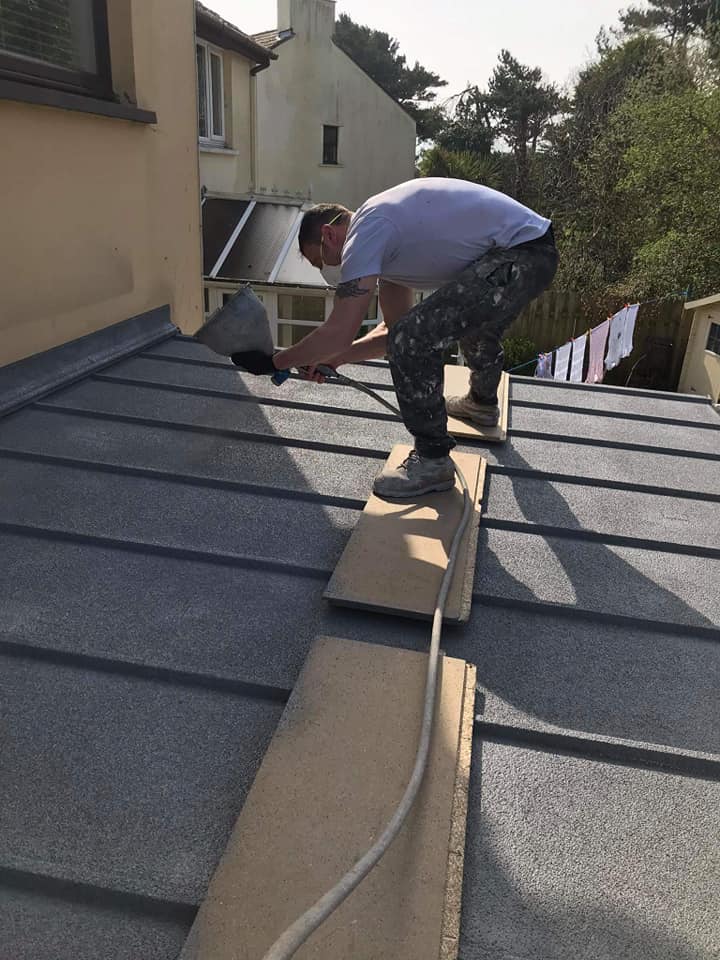
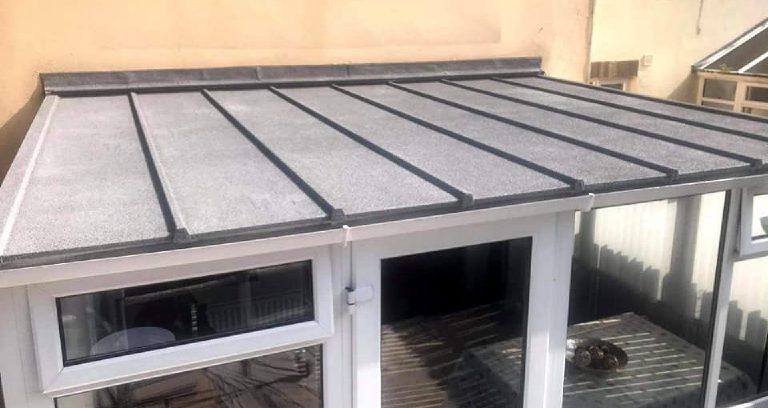
A conservatory roof at Andreas — boards laid across the panels to work off.
Most exterior jobs are two to three days. A full coastal exterior with the preparation that needs, and new guttering and downpipes on top, took us a week. Scaffolding, where it is needed, we arrange before the start date.
It is a spray, so there is overspray. We sheet under the scaffold, and it is worth moving cars well clear — yours and your neighbours'.
Inside, we would rather radiators came off the wall so we can get behind them properly; that is worth agreeing with us beforehand rather than on the morning. Sockets and switches can be unscrewed to spray behind them but do not have to be. Furniture is best out of the room. There is no hacking off and no breaking out, so it is a quiet job, and it is safe to be applied with you still living in the house.
Where you can get it
CorkSol Approved Applicator for the Isle of Man.
You cannot buy this off a shelf. It is not a DIY product and it is not sold through builders' merchants — the only way to have it applied is through an applicator who has been trained and approved by the manufacturer. We are the approved applicator for the Isle of Man.
Two questions we have been asked
Is it suitable for cellars? Yes it is — though it depends how much water ingress you are dealing with. Come and talk to us about the particular cellar.
Can you apply it to the inside of a metal container roof to keep the condensation away? Yes. We have already done a container with great results — no more condensation.
Why CorkSol?
CorkSol is a natural cork render for new build and renovation projects. It provides a sustainable, innovative solution for homes, and for residential, commercial and industrial buildings.
The Venetian Plaster Company is a CorkSol Approved Applicator, fully trained to apply the system here on the Isle of Man.
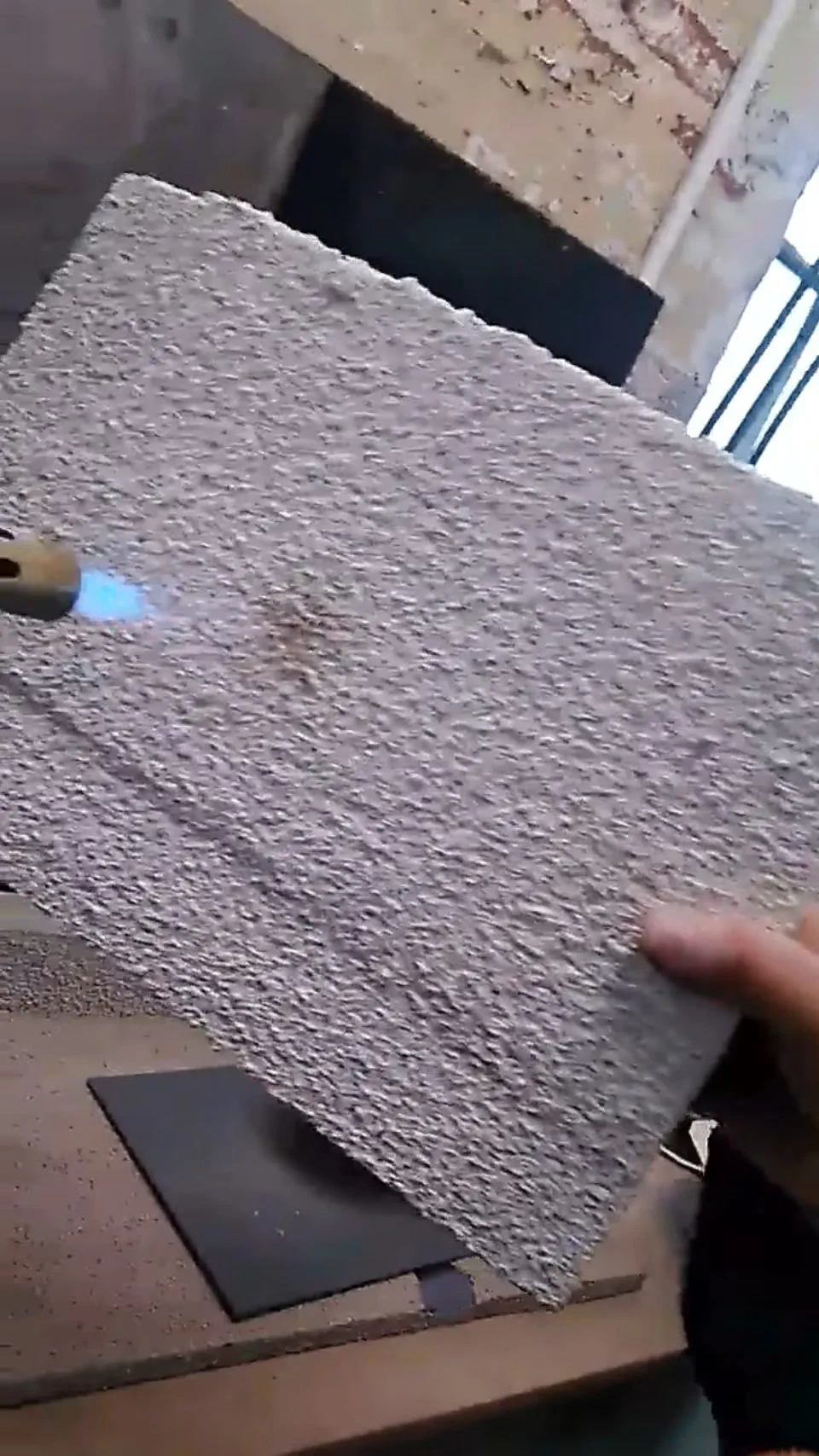
Heat test — 2mm cork wall render over polystyrene insulation board, straight under the heat gun. It just doesn't burn. The possibilities are endless.Heat test — 6mm ply with 2mm cork render. Totally amazing.First coat of our cork render system going onto an old, cracked Victorian gable that was letting in water.First coat of CorkSol going onto a property — so we gave the garage door a fresh new look as well.
Ideal Applications
Eco-friendly projects
Properties requiring insulation
External walls
Noise reduction applications
Sustainable builds
Renovation projects
Residential exteriors
Properties in exposed locations
Internal walls with damp or mould
Cellars
Shipping containers
Solid walls with no cavity
Sound insulation between offices
Reducing heating bills
Technical Specifications
Base material Natural cork granules in a water-based binder
Thermal conductivity 0.065 W/mK (EN 12667:2002)
Fire rating B-s1-d0 (EN 13501:2007) — lowest smoke production, no flaming droplets
Vapour permeability Class 1 (EN 1504-2:2005)
Flexibility 0.293 MPa, elongation to break 27–38% (EN 1607)
Application Gravity-fed hopper gun or spray machine, 6mm nozzle
External build-up Typically 3–6mm depending on substrate
Internal build-up Around 8mm including a plaster skim
Texture Lightly granulated — the granulation is what does the work
Colours Around 28 standard fade-resistant shades
Figures are the manufacturer’s, tested to the standards named.
Thinking about CorkSol for your property?
Ask us anything about the system — what it suits, how it goes on, what it looks like once it is up. Tell us about the property and we will come back to you.